Hope Quick Release Skewer Review: 100/135mm MTB Fitment, Clamping, and Who Should Use It
The Hope Quick Release Skewer pair is a small part, but it is one of those parts where buying the wrong version is annoying fast. A 100/135mm MTB quick-release pair is meant for bikes with a 100mm front QR hub and a 135mm rear QR hub. That usually means older mountain bikes, hybrids, touring bikes, commuter bikes, and some disc-brake bikes with open dropouts.
This review is less about whether the anodized lever looks good and more about fitment: 100mm front, 135mm rear, QR versus thru axle, skewer length, lever tension, and when a premium Hope skewer makes sense over a basic Shimano-style skewer.
Quick Verdict
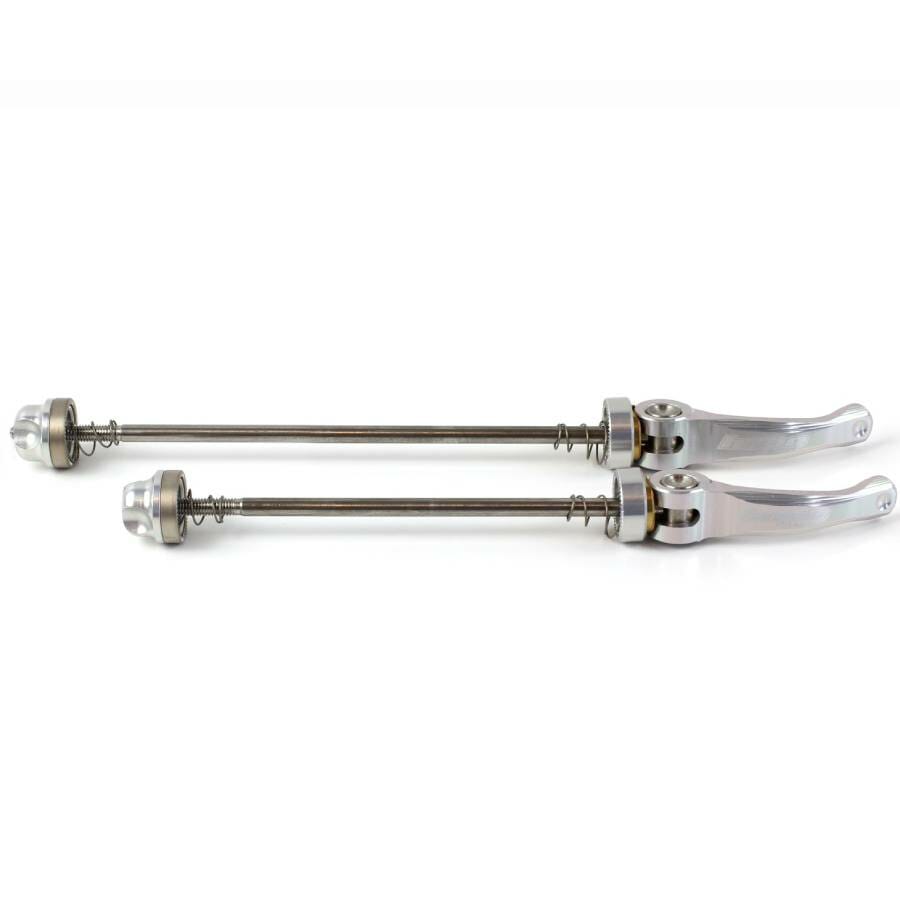
The Hope Quick Release Skewer pair is worth considering if your bike still uses traditional open dropouts and you want a nicely machined, color-matched, serviceable-feeling QR skewer rather than a cheap generic one. The 100/135mm MTB pair is the one to look at for a normal QR mountain or hybrid setup with a 100mm front hub and 135mm rear hub.
It is not the right part for thru-axle bikes, Boost 148×12 bikes, most modern road/gravel thru-axle bikes, or weird QR Boost frames unless the spacing and skewer length are confirmed. It is also not automatically better than every Shimano internal-cam skewer for pure clamping reliability. The Hope is a good premium QR option, but compatibility and lever tension matter more than the logo.
Key Specs
Hope describes its Quick Release skewers as CNC machined ergonomic levers for securely fixing wheels. The important specs are:
| Product type | Quick-release wheel skewer |
| Common MTB pair | 100mm front / 135mm rear |
| Lever material | Laser-etched anodized 2014 T6 aluminium |
| Rod material | Stainless steel |
| Available rod lengths | 100, 130, 135, 141, 170, and 190mm |
| Availability | Singles or pairs |
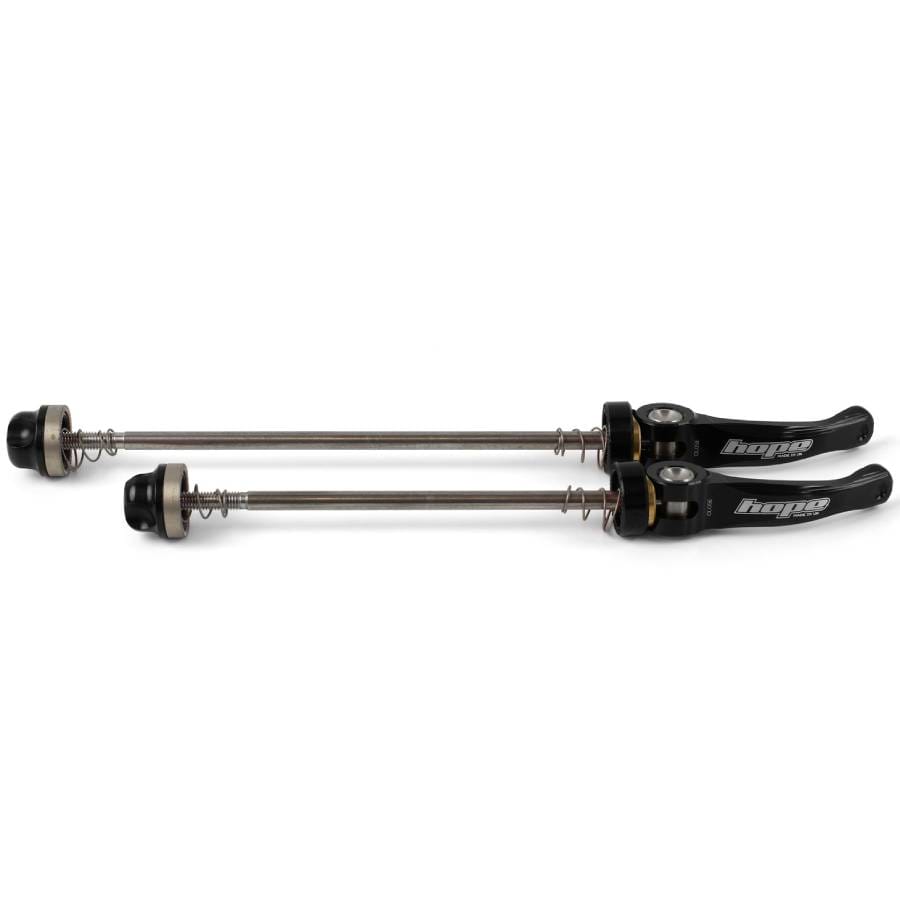
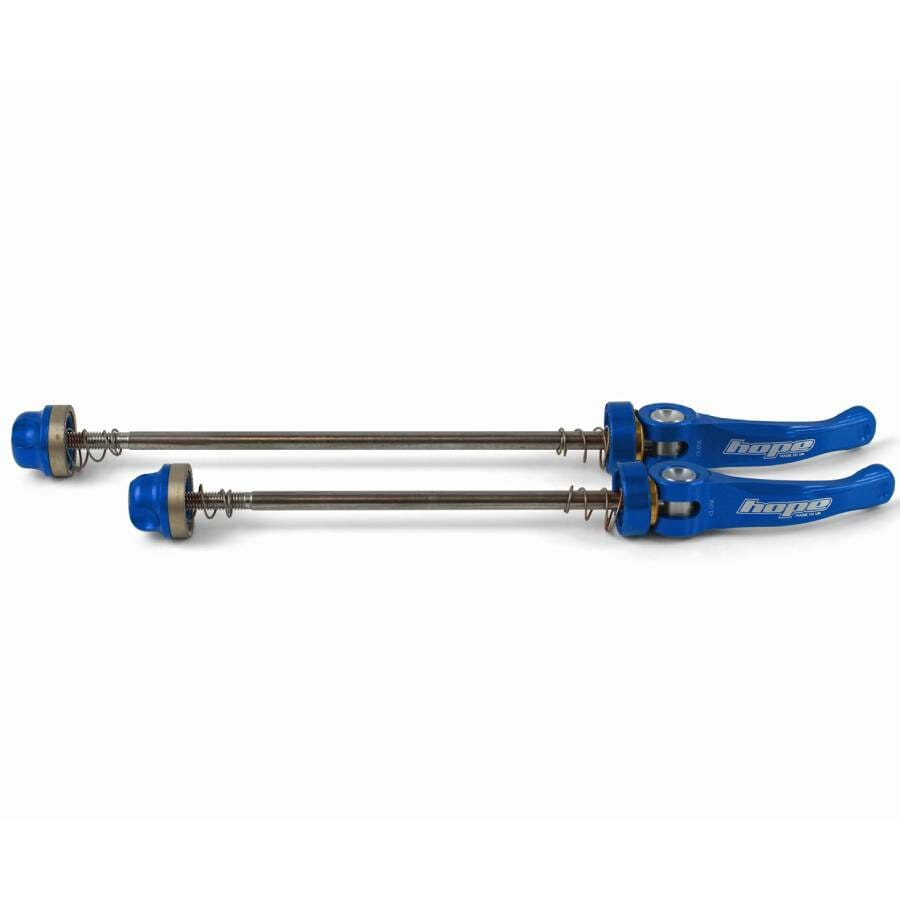
| Colors | Black, silver, red, blue, purple, and orange |
| Claimed weight | Single from 55g; pair from 119g |
The important part is the length, not the color. If you need a 100/135mm MTB pair, do not accidentally order a road 100/130mm pair or a fat-bike-length pair.
What 100/135mm Actually Means
In a normal MTB quick-release pair, 100mm refers to the front hub spacing and 135mm refers to the rear hub spacing. That spacing is the distance between the fork dropouts or frame dropouts where the hub sits. It is not the diameter of the skewer rod.
For a typical older mountain bike or hybrid with QR wheels:
- Front spacing is usually 100mm.
- Rear spacing is often 135mm.
- The frame and fork use open dropouts, not closed thru-axle holes.
- The thin skewer rod passes through the hollow axle and clamps the wheel in place.
If your bike has a big threaded axle that slides through the fork or frame and screws in, that is a thru axle, not a normal QR skewer setup.
5×135, 10×135, And Why QR Listings Get Confusing
Quick-release naming can be messy because sellers use different numbers for the same general dropout system. In a useful r/bikewrench discussion about QR wheel standards, riders explained why 5×135, 10×135, and QR rear listings often confuse people. The short version: 135mm is the rear dropout spacing, while the smaller number may refer to skewer diameter, axle end diameter, or the way the hub is being described.
That is why I would not buy a skewer from the number alone if the bike is unfamiliar. Look at the actual frame and wheel. If the rear hub sits in open dropouts and uses a thin skewer through the middle, a 135mm rear QR skewer is likely the right family. If the frame has a closed hole for a threaded axle, a QR skewer is the wrong part.
Clamping Feel And Lever Position
A good QR skewer should close firmly without needing panic-level hand force. You set the tension with the nut, then close the lever so it leaves a clear imprint in your palm. If the lever swings shut with no resistance, it is too loose. If you need to crush it closed, it is too tight.
Lever position matters too. On a mountain bike, the lever should not point forward where it can catch brush or trail debris. A common practical setup is to tuck the lever close to the fork leg or frame in a position that is easy to open intentionally but unlikely to snag.
This is where rider feedback on Hope skewers is mixed. In a SingletrackWorld thread about Hope QR skewers, one rider said theirs worked well and were easy to clean and lube, while another reported loosening and preferred Shimano. That is exactly the kind of split I would expect with QR parts: setup, dropout condition, cam design, and rider preference all matter.
QR Vs Thru Axle
A quick-release skewer is not a thru axle. A QR skewer clamps the hub axle into open dropouts. A thru axle passes through the frame or fork and hub, then threads into the opposite side. Thru axles are now common on modern mountain bikes because they improve stiffness, brake alignment, and wheel location.
That does not make QR useless. In a Reddit discussion about QR rear wheels, riders pointed out that QR mountain bikes have been used for decades and are still fine for plenty of normal riding. The balanced take is simple: QR is acceptable when the bike was designed for it and the skewer is correctly tightened, but it is not the standard I would choose for a modern aggressive trail bike build if a proper thru-axle option is available.
Who Should Buy The Hope QR Skewer Pair
This Hope skewer pair makes sense if you:
- Have a bike with 100mm front and 135mm rear quick-release hubs.
- Want a nicer machined skewer than a cheap generic replacement.
- Care about matching Hope colors with hubs, brakes, rotors, or seat clamps.
- Ride an older MTB, hybrid, commuter, touring bike, or QR disc bike that you still like.
- Want stainless rods and aluminium levers rather than plastic-feeling hardware.
It is also a tidy option if your original skewers are bent, corroded, ugly, or missing and you want the bike to feel more finished.
Who Should Skip It
Skip this skewer pair if your bike uses thru axles. A 142×12 or 148×12 rear end needs a thru axle, not a QR skewer. A modern road or gravel bike with 12mm thru axles also needs the correct thru axle, not this part.
Also pause if your rear spacing is 141mm QR Boost, 170mm fat-bike QR, 190mm fat-bike QR, or 130mm road QR. Hope makes several lengths, but the 100/135mm pair is not universal.
If you are buying purely for maximum clamping force and do not care about color or finish, a good Shimano internal-cam skewer may still be the safer boring choice for some riders. That is not a knock on the Hope; it is just the reality that QR skewers are safety hardware, not only jewelry.
Installation And Setup Notes
Before riding, set it up properly:
- Make sure the wheel axle is fully seated in the dropouts.
- Thread the nut on until the lever starts to resist around halfway through its closing arc.
- Close the lever firmly with your palm, not fingertips.
- Position the lever so it cannot easily catch trail debris.
- Check that the wheel is centered and the brake rotor does not rub heavily.
- Recheck tension after the first ride.
If the axle slips in the dropout under pedaling or braking, do not just keep tightening until something feels wrong. Inspect the dropout faces, hub axle, skewer nut serrations, and frame condition. A QR skewer should clamp securely, but it cannot fix damaged dropouts or the wrong hub standard.
What Real Riders Worry About
The practical buying checks are specific: secure clamping, correct length, QR terminology, and whether QR is still the right standard for the frame and fork. The most useful rider/mechanic advice is to measure the bike, identify the hub standard, and avoid guessing from listing names.
In another r/bikewrench buying thread, riders point out that front QR is usually straightforward at 100mm, while rear spacing can vary between older road, touring, and mountain bikes. That is the practical lesson: rear spacing is where mistakes happen.
For a normal MTB 135mm rear, the Hope pair is in the right category. For anything else, measure first.
FAQ
Is 135mm the skewer length?
In most bike listings, 135mm refers to rear hub or dropout spacing, not the total physical length of the skewer from end to end. That is why QR listings can feel confusing.
Will this fit a 142×12 or 148×12 frame?
No. Those are thru-axle standards. This 100/135mm QR pair is for traditional quick-release open dropouts.
Will this fit a 141 QR Boost bike?
Not unless you confirm the exact skewer length and hub/frame requirement. A 141mm QR Boost setup is not the same as a standard 135mm rear QR setup.
Are Hope QR skewers better than Shimano?
They are nicer looking and well made, but not every rider agrees they clamp better than Shimano internal-cam skewers. If pure clamping reliability is the only goal, Shimano is still a strong reference point. If finish, color, and Hope machining matter too, the Hope skewers make more sense.
Can I use a QR skewer for mountain biking?
Yes, if the bike was designed for QR dropouts and the skewer is properly tightened. QR is older and generally less stiff than a modern thru axle, but it is still normal on many older mountain bikes, hybrids, and entry-level bikes.
How tight should a QR skewer be?
It should close with firm palm pressure and leave a clear impression on your hand. It should not flop shut loosely, and it should not require extreme force.
Bottom Line
The Hope Quick Release Skewer pair is a good premium replacement for a bike that actually uses 100/135mm quick-release wheels. It gives you Hope machining, stainless rods, anodized colors, and a cleaner finish than a cheap generic skewer.
The main buying rule is simple: confirm your frame, fork, and hub spacing before ordering. If your bike is 100mm front and 135mm rear QR, this pair belongs on the shortlist. If your bike is thru axle, QR Boost, fat-bike QR, or road 130mm, slow down and choose the exact standard instead.