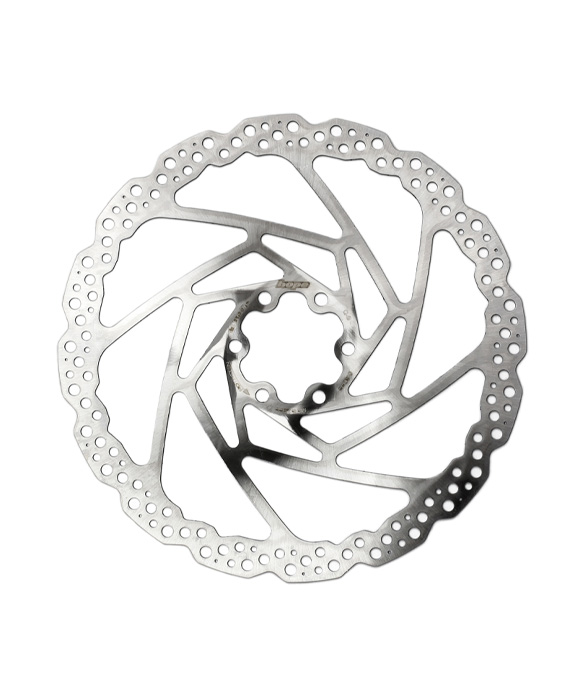
Hope Brake Rotors Guide: Fixed, Floating, Centre Lock, and Vented Options
Hope brake rotors are not all trying to solve the same problem. Some are simple fixed rotors. Some use a floating two-piece construction. Some are built around Centre Lock hubs. The thick V4 vented rotor is a much more specific heat-control part, not a normal upgrade for every brake.
The useful way to choose is by mount type, rotor size, rotor thickness, brake clearance, and heat load. Hope’s own disc rotor range includes fixed, floating 6-bolt, floating Centre Lock, RX, trial, and V4 vented options. That gives riders a lot of choice, but it also means the wrong rotor can be overkill, incompatible, or simply the wrong fit for the hub.

Quick answer
For most mountain bikes, a normal Hope fixed or floating rotor in the correct diameter is the sensible starting point. Use Centre Lock if your hub needs Centre Lock. Use RX rotors for road/gravel applications. Look at the V4 vented rotor only when you are running a compatible Hope V4-style setup and actually need the extra heat capacity.
Hope rotor options
Hope’s rotor tech book explains the range as fixed, floating, and vented disc designs with 6-bolt or Centre Lock fitment. The fixed rotor is the straightforward all-round option. Floating rotors split the braking surface from the carrier. Vented rotors are the high-heat option for specific brakes and riding.
| Rotor type | Best use | Main thing to check |
|---|---|---|
| Fixed rotor | Simple, durable, cost-effective braking for many MTB setups | Diameter, 6-bolt hub fitment, brake clearance, and thickness. |
| Floating 6-bolt rotor | MTB riders wanting Hope’s two-piece floating design on a 6-bolt hub | Hub mount, rotor size, caliper clearance, and carrier clearance. |
| Floating Centre Lock rotor | Centre Lock hubs where a Hope floating rotor is wanted | Centre Lock hub standard, lockring clearance, and rotor size. |
| RX rotor | Road and gravel disc brake use | Road/gravel caliper clearance and correct 140/160 mm sizing. |
| V4 vented rotor | High-heat gravity, downhill, e-bike, tandem, or heavy-load use with compatible V4-style brakes | 3.3 mm thickness, V4 compatibility, 203/220 mm sizing, and frame/fork clearance. |
Fixed rotors vs floating rotors
A fixed rotor is the cleaner answer when you want fewer variables. Hope describes fixed rotors as a robust all-round option, and its rotor tech book notes that fixed rotor thickness varies by size: smaller rotors use 1.8 mm material, while rotors from 180 mm upward use 2.3 mm material for more stiffness, strength, damping, and thermal stability.
Floating rotors add a separate carrier. Hope’s floating 6-bolt rotor page says the design lets the stainless braking surface expand separately from the centre when heat builds. That is the appeal: heat movement is handled differently, and the aluminium centre also helps keep weight down. The tradeoff is that fitment has more details: carrier clearance, caliper clearance, and sometimes noise or movement that riders may notice.
6-bolt vs Centre Lock
This is a hub question first. If your hub is 6-bolt, use a 6-bolt rotor unless you are changing hardware. If your hub is Centre Lock, use a Centre Lock rotor or a suitable adapter. Hope’s floating Centre Lock rotor page uses the same broad floating design idea: a stainless steel braking surface with an aluminium centre, made to handle heat while keeping weight sensible.
Do not choose the mount type because one looks better. Choose it because it matches the hub, the lockring or bolt interface, and the brake clearance around the frame and fork.
Rotor thickness matters
Thickness is one of the easiest details to miss. Hope’s disc range includes 1.8 mm floating rotors, fixed rotors with 1.8 mm and 2.3 mm thickness depending on size, and a 3.3 mm V4 vented rotor. Those are not interchangeable assumptions.
A thicker rotor can add stiffness and heat capacity, but the caliper has to accept it. A 3.3 mm vented rotor is not something to fit to any random brake. Hope’s V4 vented rotor page lists it as a 3.3 mm, 6-bolt rotor in 203 mm and 220 mm sizes, designed specifically for V4 brakes.
When the V4 vented rotor makes sense
The V4 vented rotor is the one riders ask about because it looks serious and costs serious money. It is built for heat, not for ordinary trail-bike decoration. Hope describes it as the highest-performance option in the disc range, with a three-piece design and internal fins to move air between the two braking surfaces.
That makes sense for downhill, bike-park laps, heavy riders, tandems, e-bikes, and long descents where brake temperature is already a real issue. It makes less sense if the bike is light, the trails are short, or the brake problem is actually pad contamination, a poor bleed, or a small rotor diameter.
We covered that specific part separately in the Hope V4 Vented Rotor review. The short version is simple: the vented rotor is useful when heat is the limiting factor and the brake is compatible. It is not the default rotor choice.
Rotor size: 160, 180, 200, 203, or 220 mm?
Rotor size changes leverage and heat capacity. Bigger rotors give the brake more leverage and more surface area to handle heat. Smaller rotors save weight and can feel cleaner on lighter bikes, but they run out of margin sooner on steep or long descents.
For road and gravel, 140 mm and 160 mm are common depending on rider weight, terrain, and frame/fork limits. For mountain bikes, 180 mm, 200 mm, 203 mm, and 220 mm are the more relevant sizes. Before going bigger, check frame and fork maximum rotor size, brake mount, adapter, and whether the caliper sits correctly over the braking track.
What riders worry about in real use
Rider discussions usually come back to the same themes: thickness, compatibility, heat, noise, and whether a thick rotor will fit a non-Hope caliper. In a SingletrackWorld discussion about 2.3 mm disc rotors, riders specifically separate normal 2.3 mm options from Hope’s 3.3 mm V4 vented rotor. That distinction matters because a rotor can be technically impressive and still be the wrong part for a given brake.
A Reddit discussion about 200 mm and 220 mm downhill rotors makes the same practical point from the rider side: people compare heat control, caliper clearance, and pad spread, not only brand names. Treat those comments as anecdotal, but useful. They show why rotor choice is not just a diameter number.
Road and gravel: RX rotors
Hope’s RX rotor line is aimed at road and gravel disc brake use. The RX Centre Lock rotor page describes a Centre Lock rotor for road applications, while Hope also offers RX 6-bolt options. Sizes are generally smaller than the heavy MTB and V4 vented world.
If you are working on a gravel or road bike, do not copy mountain-bike rotor advice blindly. Start with frame/fork clearance, caliper type, hub mount, and whether the brake is designed around 140 mm or 160 mm rotors. Our Hope RX Centre Lock Disc review goes deeper into the 160 mm road/gravel use case.
Common mistakes
- Buying by color first: rotor color is less important than mount, size, thickness, and clearance.
- Assuming all Hope rotors fit all Hope brakes: the V4 vented rotor is a specific thick rotor, not a universal disc.
- Ignoring frame and fork limits: a larger rotor needs the correct adapter and must stay within the bike’s rated limits.
- Using a rotor swap to hide a setup problem: contamination, poor bedding-in, pad choice, or a weak bleed can still make a good rotor feel bad.
- Mixing road/gravel and MTB assumptions: RX rotor sizing and V4 gravity rotor sizing solve different problems.
Bottom line
For most riders, the best Hope rotor is the one that matches the hub, brake, and heat load without adding unnecessary complexity. Fixed rotors are the simple all-round choice. Floating rotors add Hope’s two-piece heat-management design. RX rotors belong in the road/gravel conversation. V4 vented rotors are for compatible high-heat setups, not casual upgrading.
Start with fitment. Then choose size. Then choose fixed, floating, or vented based on the riding, not the other way around.
FAQ
Are Hope brake rotors universal?
No. You need the correct hub mount, diameter, rotor thickness, caliper clearance, and brake mount setup. The V4 vented rotor is especially specific because of its 3.3 mm thickness.
What is the difference between Hope fixed and floating rotors?
A fixed rotor is a one-piece disc. A floating rotor uses a separate carrier and braking surface so the braking surface can expand separately when heated.
Can I use a Hope V4 vented rotor with any brake?
No. Hope lists the vented rotor as a 3.3 mm rotor designed specifically for V4 brakes. Do not assume a non-V4 caliper has enough pad spread or clearance.
Is a 220 mm rotor better than a 203 mm rotor?
It can offer more leverage and heat capacity, but only if the frame, fork, adapter, and brake setup support it. Bigger is not automatically better on every bike.
Should I choose 6-bolt or Centre Lock?
Choose the interface your hub uses. A 6-bolt hub needs a 6-bolt rotor. A Centre Lock hub needs a Centre Lock rotor or a suitable adapter.