Hope BSA30 Threaded Bottom Bracket Review: Fitment, Install Notes, and Who It Is For
The Hope BSA30 threaded bottom bracket is for riders who want to run a 30mm crank axle in a traditional BSA threaded frame. That sounds simple, but this is one of those parts where the details matter: shell width, axle length, cup clearance, bearing serviceability, and the correct installation tool all determine whether it is the right bottom bracket for your bike.
This review focuses on the technical side: fitment, compatibility, install notes, serviceability, and whether the Hope unit makes sense compared with cheaper threaded bottom brackets.
Quick Verdict
The Hope BSA30 threaded bottom bracket is a strong choice if you have a BSA threaded frame and a compatible 30mm spindle crank with enough axle length. The standout points are the machined aluminum cups, stainless cartridge bearings, replaceable bearing design, broad shell-width support, and Hope's proven serviceability.
It is not the cheapest way to put a crank in a bike, and it is not a universal fix for every 30mm crank. The main thing to check before buying is whether your crank axle is long enough for the installed over-bearing width and whether your crank, especially a power-meter crank, has enough clearance around the external cups.
Who Should Consider It
This bottom bracket makes the most sense for riders with:
- A BSA or English threaded bottom bracket shell.
- A crankset with a 30mm axle.
- A frame shell width in the supported range: 68, 73, 83, 100, or 120mm.
- A preference for serviceable, replaceable cartridge bearings instead of disposable low-cost units.
- A bike that sees bad weather, mud, or year-round riding where bearing quality matters.
It is especially appealing for mountain bikes, downhill bikes, fat bikes, and all-weather builds where a threaded shell plus a quality external bottom bracket is still a very practical setup.
Key Specs
Hope lists this as an external threaded bottom bracket, available for both 24mm and 30mm crank axles. For the 30mm version, the key specs are:
- Bottom bracket type: external threaded bottom bracket.
- Frame interface: BSA / English threaded.
- Crank axle: 30mm.
- Supported shell widths: 68, 73, 83, 100, and 120mm.
- Bearing type: stainless cartridge bearings.
- Bearing design: replaceable cartridges.
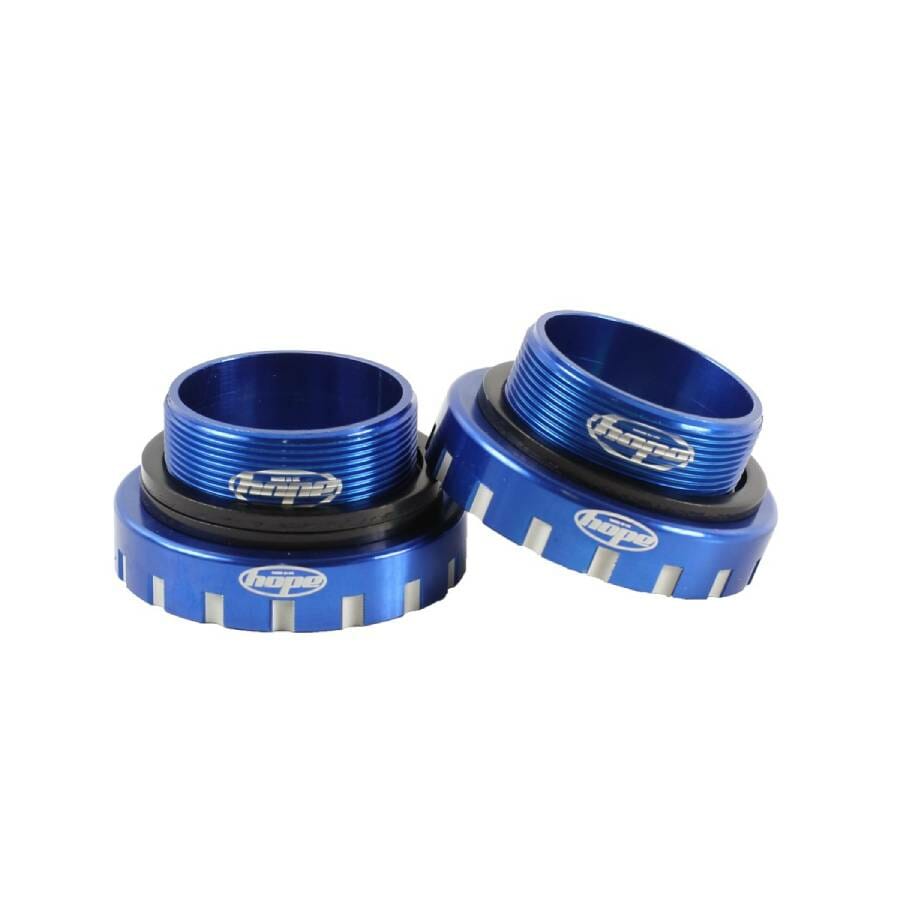
- Cup material: machined aluminum.
- Claimed weight: 102g for the 30mm version.
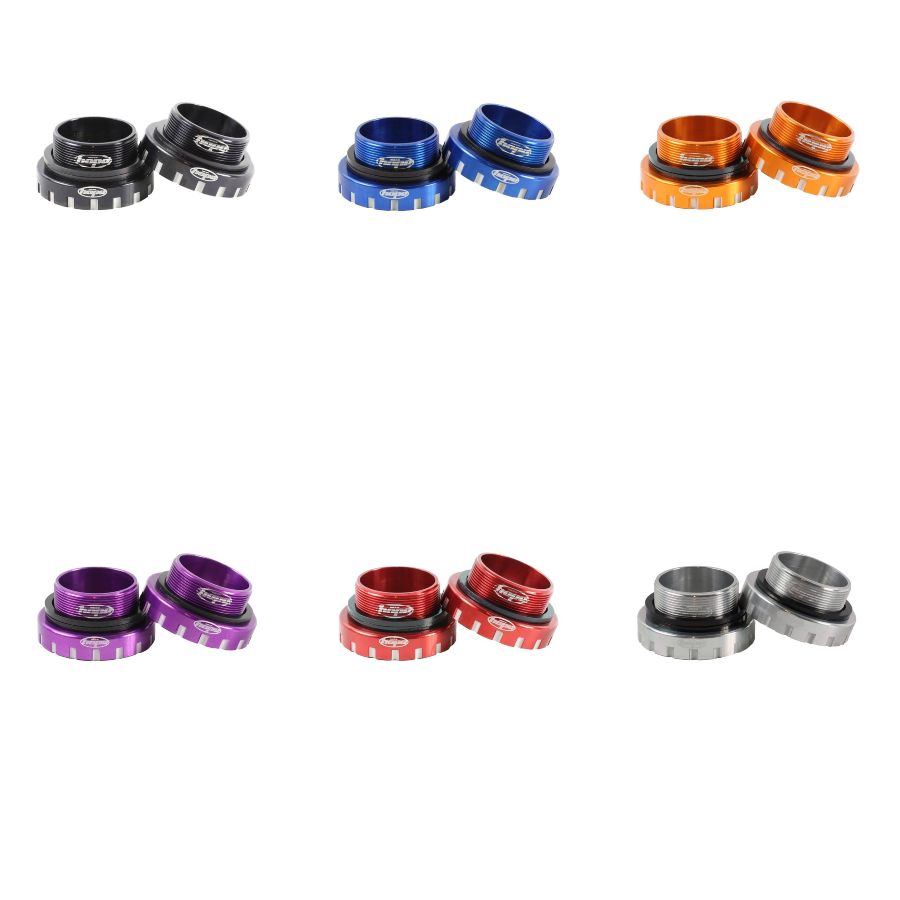
- Colors: black, silver, smoke, blue, red, purple, and orange.
- Required fitting tool: Hope HTT188 for the 30mm version.
The most important spec is not the color or weight. It is the relationship between shell width, crank axle length, and the installed width of the bottom bracket. Hope's compatibility chart notes that riders should check that the crankset has the required axle length for the installed over-bearing width.
Fitment: What BSA30 Actually Means
BSA30 means you are pairing a BSA threaded frame with a crank that uses a 30mm axle. Traditional BSA shells were originally common with smaller axle systems, so a 30mm axle in a threaded shell leaves less room around the bearings than some other standards.
That does not make BSA30 bad. It just means fitment needs to be treated carefully. The Hope unit places the bearings outside the frame shell in machined cups, which allows a 30mm axle to work in a threaded frame when the crank axle is long enough.
Before buying, confirm three things:
- Your frame has a BSA threaded shell, not press-fit BB30 or PF30.
- Your crank axle is 30mm and long enough for the installed width.
- Your frame shell width matches the bottom bracket setup you are ordering.
If your crank maker does not confirm compatibility with the installed over-bearing width shown in Hope's chart, do not assume it will fit just because the spindle is 30mm. Axle length is the detail that often makes or breaks the setup.
Shell Widths And Spacer Logic
Hope's BSA chart covers this 30mm threaded bottom bracket across common and wide BSA shells, including 68, 73, 83, 100, and 120mm. That covers road, MTB, downhill, and fat-bike use cases.
The shell-width side is not just a label. Wider shells change the installed over-bearing width and spacer setup. Hope's BSA compatibility chart lists different installed widths across road, MTB, downhill, and fat-bike setups, and it calls out the need to confirm crank axle length before installation.
The practical takeaway: buy the correct setup for your frame width and crank type, and do not guess on spacers. If the crank maker publishes a minimum axle length or bottom bracket compatibility chart, check that alongside Hope's chart.
What Riders Are Actually Warning About
The tricky part with this product is that proper owner reviews are thin. Most of the useful buying advice comes from rider and mechanic discussions, so I would not pretend there is a big verified-review consensus here.
The useful signal is in mechanic and rider threads, because that is where people get stuck before buying. In one r/bikewrench BSA30 compatibility thread, the original poster was building a wet-weather gravel bike and wanted to know whether a sleeved BSA30 setup made sense. One reply said they had a Hope external 30mm bottom bracket in a frame and chose stainless bearings for better survival in the wet. Another rider pushed the caution further: with a 30mm spindle inside a BSA shell, there is very little spare space, so on a steel frame used in moisture and salt, they would personally lean toward a smaller spindle system instead.
That is exactly the kind of detail to care about before buying. If your bike is aluminum or carbon and you are mainly worried about bearing life, the Hope's stainless, replaceable bearing setup is a real reason to consider it. If it is a steel gravel frame that sees winter salt, mud, and lots of washing, the question is not just "does it fit?" It is also "am I comfortable running a 30mm spindle in this shell without much room for a sleeve or drainage?"
There is a second lesson from a DUB-in-Hope-BB discussion. The rider was using a Hope BSA30 bottom bracket with SRAM DUB cranks and a 1mm shim, but was not happy that grit and grime could get into the setup. That does not make the Hope bad. It means DUB, 29mm, 30mm, shims, and replacement bearings should not be treated as interchangeable just because they sound close on paper.
Fitment confusion shows up in simpler ways too. In a Race Face Atlas crank thread, one rider says they use Atlas 30mm spindle cranks with a Hope BSA30 bottom bracket, while another person immediately asks what frame and bottom bracket style the original poster actually has. That is the right instinct. Before ordering, identify the frame shell first, then the crank spindle, then the shell width, then the required spacers.
The short version: this is a good bottom bracket when the whole system is right. It is not a magic adapter for every 30mm crank, and it is definitely not a product I would buy by matching only the words "BSA" and "30mm."
Install Notes
The 30mm version requires Hope's HTT188 fitting tool. That is worth knowing before the box arrives, because a standard bottom bracket tool that works on another external cup may not be right for this one.
A clean install should include:
- Confirming the frame shell is clean and the threads are in good shape.
- Greasing the frame threads unless the frame or mechanic specifies otherwise.
- Checking the correct spacer layout for the frame shell width and crank.
- Using the HTT188 tool to avoid damaging the cups.
- Checking crank spin and side-load after everything is torqued.
- Rechecking clearance around any power-meter hardware.
Hope also notes that some power-meter cranks may not have enough clearance over the bottom bracket cup. That is not a small caveat. If you run a power-meter crank, inspect clearance before committing to the setup.
Bearing And Seal Design
The reason to buy the Hope over a cheaper generic BSA30 option is the bearing and cup package. Hope uses machined aluminum cups with stainless cartridge bearings, and the bearings are replaceable. That matters if you ride in wet conditions or want to service the part rather than throw it away when the bearings wear.
Hope also uses a low-drag labyrinth seal to protect the bearings. The goal is simple: enough sealing to help the bearings live, without adding unnecessary drag.
This is why the part fits Hope's usual appeal. It is not only about whether it works on day one. It is about whether the cups, bearings, and seals are worth keeping in service over time.
Owner comments on Hope bottom brackets generally line up with that, though not in a perfectly tidy way. In a SingletrackWorld thread about whether Hope bottom brackets are worth the cost, one rider says their Hope BSA bottom bracket has been through about 10,000 miles since 2014 and is still smooth, with occasional seal and bearing cleaning. Another poster in the same discussion gives the more important warning: a premium bottom bracket will not fix a badly finished or misaligned shell. If the frame is eating bearings, facing and alignment may matter more than buying a nicer cup.
That is the balanced take. Hope is worth paying for if you want serviceable cups and are willing to maintain them. It is not worth using as a bandage for a frame or crank setup that is already wrong.
Pros
- Works with 30mm axle cranks in compatible BSA threaded frames.
- Supports a wide range of shell widths.
- Stainless cartridge bearings are replaceable.
- Machined aluminum cups feel more premium than budget units.
- Good option for all-weather bikes, mountain bikes, downhill bikes, and fat bikes.
- Multiple anodized color options.
- Strong manufacturer documentation and compatibility charts.
Color Options
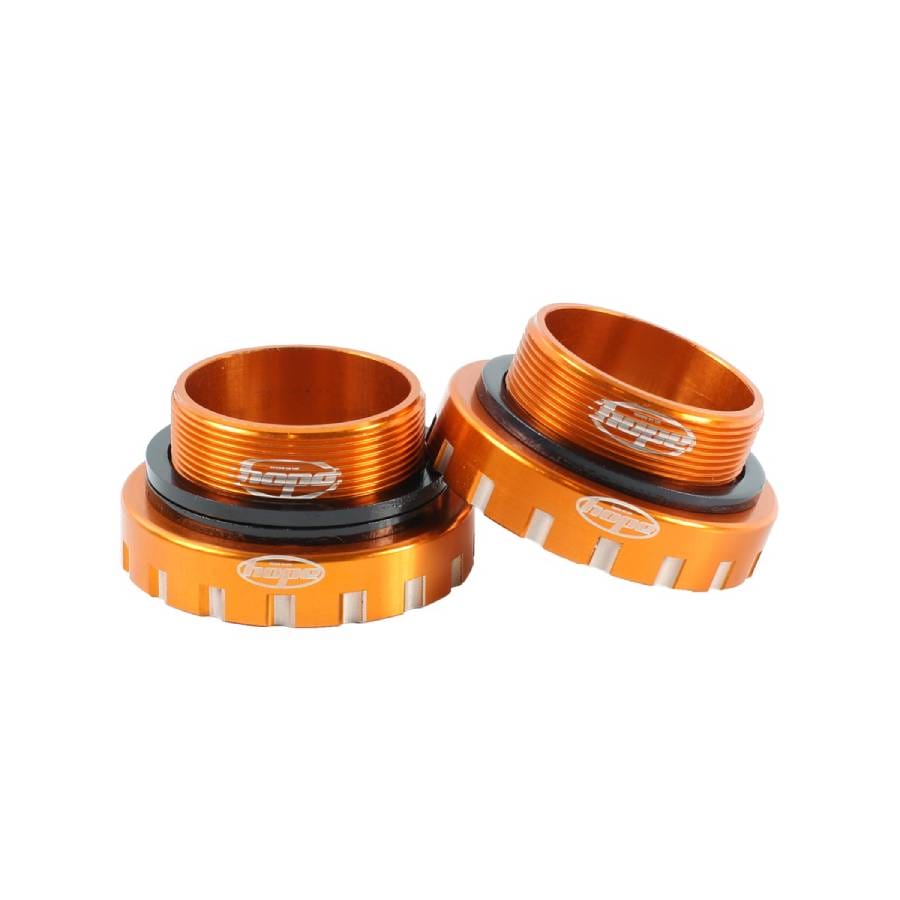
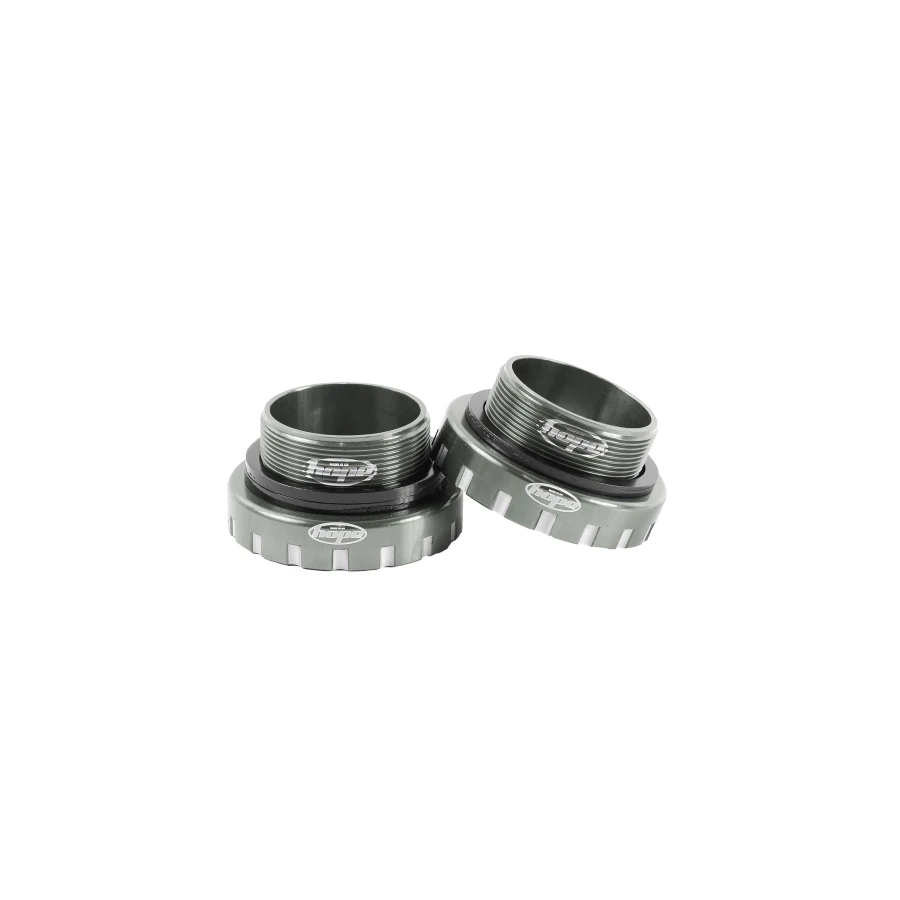
The Hope BSA30 threaded bottom bracket comes in several Hope anodized finishes. Current listings commonly show black, blue, orange, purple, red, silver, and smoke options.
Cons
- Requires the Hope HTT188 fitting tool.
- Not every 30mm crank setup will have the axle length needed for the installed over-bearing width.
- Power-meter crank clearance needs to be checked carefully.
- More expensive than basic disposable threaded bottom brackets.
- Fitment depends on shell width, crank type, spacers, and axle length, so it rewards careful measuring.
Who Should Skip It
Skip this bottom bracket if you cannot confirm your crank axle length against the installed over-bearing width in Hope's chart. Also skip it if you want the cheapest possible threaded bottom bracket and do not care about replaceable bearings or long-term serviceability.
If you are unsure about your crank axle length, pause before buying. The frame shell standard and crank axle diameter are not enough by themselves.
Alternatives To Consider
If you have a 24mm Shimano-style crank, you probably do not need the BSA30 version. Hope also offers threaded bottom bracket options for 24mm axles. If you are using SRAM DUB or GXP, look at the correct conversion or dedicated bottom bracket path rather than assuming the 30mm unit is the right fit.
For riders building from scratch, the bigger decision is often crank first, bottom bracket second. Choose the crank standard, confirm the frame shell, then pick the bottom bracket that correctly connects the two.
Final Recommendation
The Hope BSA30 threaded bottom bracket is a smart pick for the right rider: someone with a BSA threaded frame, a compatible 30mm crank, and enough attention to fitment details to install it correctly. Its strongest qualities are serviceability, bearing quality, broad shell-width support, and Hope's clear compatibility documentation.
The one thing not to do is treat it as a universal adapter for every 30mm crank. Check the shell width, installed width, axle length, tool requirement, and power-meter clearance before buying.
FAQ
Will this fit a 30mm crank spindle?
Yes, it is designed for 30mm crank axles, but the crank axle also needs enough length for the frame shell and external cup setup.
Is this for BSA or BB30 frames?
This is for BSA / English threaded frames. It is not a press-fit BB30 bottom bracket.
Which shell widths does it support?
Hope lists support for 68, 73, 83, 100, and 120mm shell widths, with setup details depending on the frame and crank.
Do I need a special tool?
Yes. Hope states that the 30mm version needs the HTT188 fitting tool.
Can I use it with a power-meter crank?
Possibly, but check clearance first. Hope notes that some power-meter cranks may not clear the bottom bracket cup.