Hope Seatpost Clamp Review: Sizing, Dropper Fit, Torque Caution, and Who Should Use It
The Hope Seatpost Clamp is the kind of finishing-kit part that looks simple until you order the wrong size or over-tighten it around a dropper post. It is a small collar, but it sits at a critical point: the seat tube, seatpost, and frame all meet there, and the clamp has to hold the post without crushing or binding anything.
This review focuses on the bolted Hope seatpost clamp: sizing, dropper-post use, slipping, torque caution, frame material, and who should spend extra on a machined clamp instead of a basic replacement.
Quick Verdict
The Hope Seatpost Clamp is a good upgrade if you want a clean, machined bolted clamp with a broad size range and a design aimed at even clamping force. It makes the most sense on mountain, gravel, commuter, and dropper-post bikes where the original clamp is rough, damaged, ugly, or not holding the post properly.
It is not a magic fix for every slipping seatpost. If the post is the wrong diameter, the frame is out of spec, the seat tube is dirty, or the clamp is being tightened against the wrong part of the seat tube, a nicer clamp may not solve the real problem. Measure first, then buy.
Key Specs
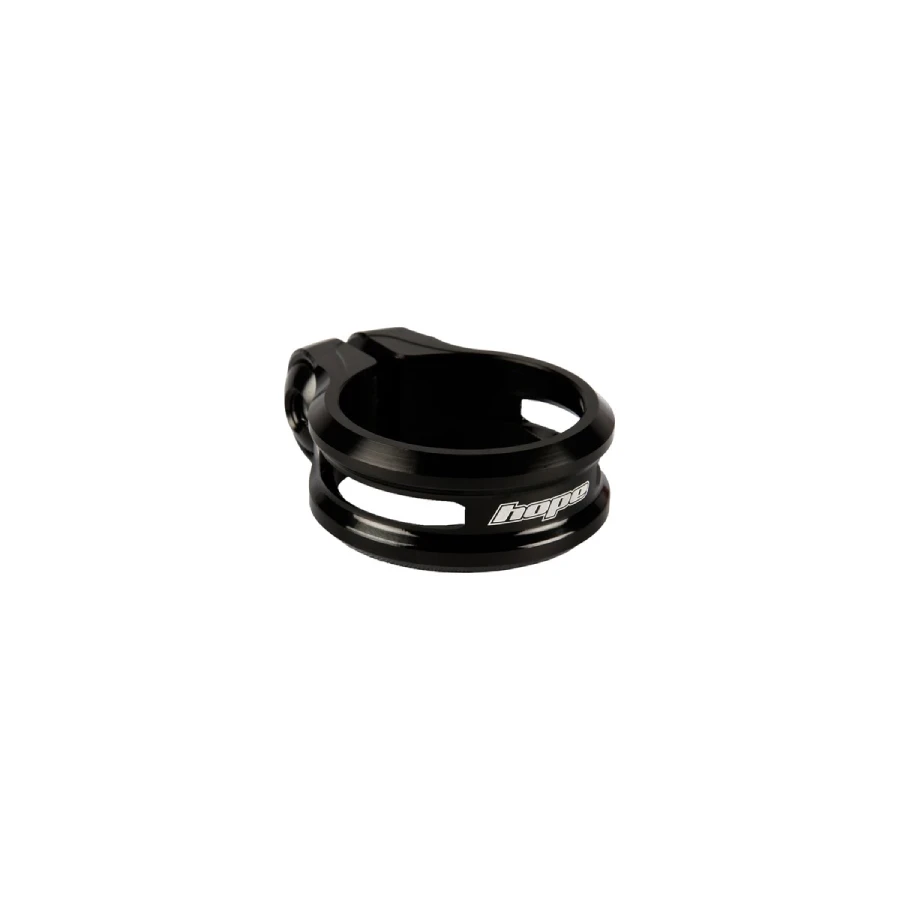
Hope lists the Seat Clamp / Bolt as a CNC-machined seatpost clamp designed to give even, consistent clamping force while helping prevent seatpost damage and maintaining dropper-post function.
| Product type | Bolted seatpost clamp |
| Clamp material | 2014 T6 aluminium |
| Bolt | Stainless steel bolt |
| Alignment feature | Spherical seat bolt and nut |
| Dropper detail | Large clamping area for improved dropper-post function |
| Sizes | 28.6, 30.0, 31.8, 34.9, 36.4, 38.5, and 39.7mm |
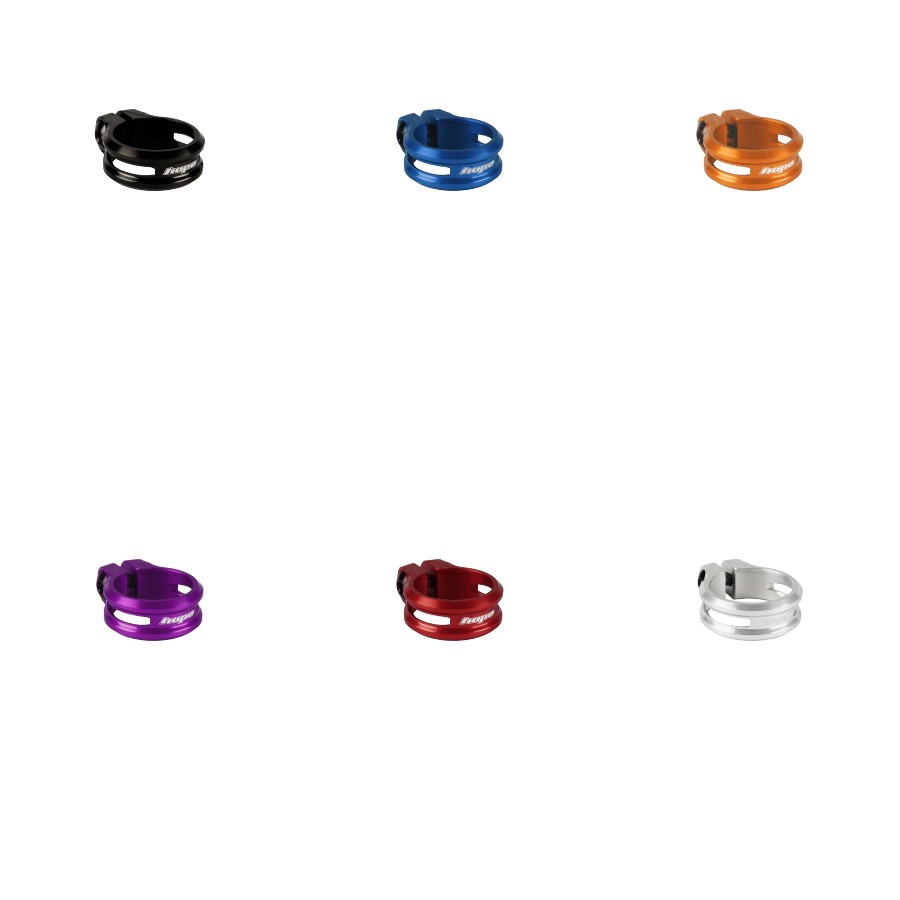
| Colors | Black, silver, smoke, blue, red, purple, orange |
| Design note | Common clamp body with QR version for future setup changes |
The headline spec is not the color. It is the clamp diameter. A seatpost clamp is sized to the outside diameter of the frame’s seat tube, not the seatpost diameter.
How To Choose The Right Size
This is the most common mistake: riders see a 31.6mm seatpost and assume they need a 31.8mm clamp. Sometimes that may be true, but it is not the rule. The clamp fits around the outside of the frame’s seat tube. The seatpost fits inside the frame.
For example, a frame using a 31.6mm seatpost might use a 34.9mm seat clamp, but the only safe answer is to check the frame spec or measure the outside of the seat tube with calipers. If you are replacing an existing clamp, the size may be printed on the old clamp, but do not trust a worn or aftermarket clamp blindly if the post has been slipping.
Before buying, confirm:
- The outside diameter of the seat tube.
- The frame maker’s recommended clamp size.
- The seatpost diameter and whether it matches the frame.
- Whether the bike uses a normal external clamp or an integrated/wedge clamp.
The Hope clamp is for normal external seat-clamp setups. It is not a replacement for a frame-specific wedge or hidden integrated clamp.
Dropper Post Use
Hope specifically calls out the clamp’s large clamping area as useful for dropper-post function. That matters because a dropper post can bind if the seat tube is squeezed too hard. A clamp needs enough hold to stop the post slipping, but not so much pressure that it compresses the post body and makes the dropper slow, sticky, or unreliable.
In a Reddit discussion about a sliding dropper post, riders pointed out the usual balancing act: too little clamp force lets the post slip, while too much force can affect the dropper’s internal bushings. That is exactly why the clamp, post diameter, seat tube condition, and assembly paste all matter together.
If your dropper slips, do not immediately keep tightening. Clean the post and inside of the seat tube, check the post size, inspect the clamp, and use the frame or post maker’s torque guidance. If the post still slips at the correct setup, the issue may not be the clamp alone.
Carbon And Torque Caution
Carbon frames and carbon posts deserve extra care. Do not use a random torque number from a forum as your final answer. Use the frame maker’s and seatpost maker’s instructions, and use the minimum clamping force that prevents slip.
In a carbon-frame seat collar discussion, riders gave different torque suggestions and repeatedly came back to the same practical point: check the manual, start carefully, and avoid over-tightening. That is the right lesson. A premium clamp does not remove the need to respect the frame and post limits.
Carbon assembly paste can help in some setups because it increases friction without simply adding more clamp pressure. But even paste is not a cure for a wrong-size post or a damaged frame.
Why Seatposts Slip
A slipping seatpost is not always caused by a bad clamp. Common causes include:
- Wrong seatpost diameter.
- Wrong seat clamp size.
- Dirty or greasy seat tube.
- No assembly paste where it is recommended.
- Damaged clamp bolt or threads.
- Clamp not aligned with the seat tube slot.
- Frame or seatpost outside normal tolerance.
- Dropper post binding from too much clamp force.
One useful seatpost clamp troubleshooting thread makes this point well: if the post will not stay put, measure the post and seat tube instead of assuming the clamp is the whole problem.
Bolted Clamp Vs Quick Release
A bolted clamp is the better choice if you usually leave saddle height alone. It is cleaner, less tempting for theft, and less likely to be opened accidentally. A quick-release clamp makes sense if several riders share the bike, or if you regularly move saddle height on a bike without a dropper.
Hope notes that the clamp body is common between bolted and QR versions, so the setup can be changed later. That is useful if your bike changes role, but most riders should choose the version that matches how they actually adjust saddle height.
Who Should Buy The Hope Seatpost Clamp
The Hope Seatpost Clamp makes sense if you:
- Know your correct external seat-tube clamp size.
- Want a clean machined bolted clamp.
- Use a dropper post and want a clamp designed around even pressure.
- Are replacing a cheap, rough, corroded, or damaged clamp.
- Want a Hope color to match other finishing-kit parts.
- Prefer a bolted clamp over a quick-release lever.
It is a small upgrade, but on a tidy build, small finishing-kit parts are often what make the bike feel intentional.
Who Should Skip It
Skip it if you have not confirmed the size. Guessing seat clamp size is the easiest way to waste money on this part.
Also skip it if your frame uses a proprietary wedge or integrated clamp. This Hope clamp is for conventional external collar setups, not hidden frame-specific systems.
If your seatpost is slipping because the post is undersized, the frame is damaged, or the dropper is binding internally, a nicer clamp may not solve it. Fix the fit problem first.
FAQ
What size Hope seat clamp do I need?
You need the clamp size that matches the outside diameter of your frame’s seat tube. It is not the same thing as seatpost diameter. Check the frame spec or measure the seat tube with calipers.
Will a 31.6mm seatpost use a 31.8mm clamp?
Not necessarily. Many frames with 31.6mm posts use larger external clamp sizes, often around 34.9mm, but the correct answer depends on the frame’s seat tube outside diameter.
Is the Hope seatpost clamp good for dropper posts?
Yes, Hope specifically mentions a large clamping area for improved function with dropper seatposts. The clamp still needs to be sized and tightened correctly so the dropper does not slip or bind.
Should I use carbon paste?
Use it if the frame or seatpost maker recommends it, especially with carbon parts or stubborn slipping. Do not use paste as a substitute for the correct post and clamp size.
How tight should a seatpost clamp be?
Use the frame, seatpost, or dropper-post maker’s torque guidance. If you do not have a confirmed spec, tighten carefully and use the minimum force that prevents slip. Avoid crushing the post or binding the dropper.
Is bolted better than quick release?
For most modern bikes, yes, unless you frequently change saddle height by hand. A bolted clamp is cleaner and more secure. A QR clamp is useful when fast saddle-height changes matter.
Bottom Line
The Hope Seatpost Clamp is a nice, well-considered finishing part when you buy the correct size and install it properly. The large clamping area, spherical bolt/nut alignment, stainless bolt, and broad size range make it more than just a color-matching collar.
But the basic rule is still boring and important: measure the frame, confirm the clamp size, clean the parts, and follow the correct torque guidance. If you do that, the Hope clamp is a solid upgrade. If you guess, it can become one more small part that causes a big headache.