Hope Tech 4 Easy Brake Bleed Kit Review: DOT 5.1, Setup, and Who Should Use It
The Hope Tech 4 Easy Brake Bleed Kit is not a glamorous upgrade. It is the tool you buy when the lever feel starts going soft, a hose has been shortened, or you want to service Tech 4 brakes without improvising with random syringes and fittings.
The important bit is fit. Hope Tech 4 brakes use DOT brake fluid, and the bleed process is built around Hope’s lever reservoir and caliper bleed nipple. A generic kit can sometimes be made to work, but the dedicated kit makes more sense if you expect to maintain Tech 4 brakes more than once.
Quick Verdict
The Hope Tech 4 Easy Brake Bleed Kit is worth buying if you own Tech 4 brakes and plan to bleed them at home. It removes a lot of the guesswork around the reservoir cap, hose fitting, and fluid handling, which is where home brake bleeds often become messy.
It is not a fix for every brake problem. If the pads are contaminated, the rotor is oily, the pistons are sticky, or the hose/olive/barb connection is leaking, a bleed kit will not magically make the brake right. Use it as part of proper diagnosis, not as a panic button.
What The Kit Is For
This kit is for bleeding Hope Tech 4 hydraulic disc brakes. The job is simple in theory: move fresh DOT fluid through the system, remove trapped air, and leave the lever and caliper sealed with clean fluid inside. In practice, small details matter.
Hope’s Tech 4 bleed instructions call for DOT 5.1 fluid, an 8mm spanner on the caliper bleed nipple, a hose running to a waste container, and an easy-bleed reservoir at the master cylinder. The same document also makes the sequence clear: open the bleed nipple only during the lever stroke, close it before releasing the lever, and repeat until the fluid runs clean with no bubbles.
That closing-before-release step is not just workshop theatre. If the nipple is open when the lever comes back, air can be pulled back into the system. That is how a brake can feel worse after a “bleed” than it did before.
DOT 5.1 Matters
Hope Tech 4 brakes are DOT-fluid brakes. Do not treat DOT and mineral oil as interchangeable. In Hope’s braking guide, Hope explains that brake seals are designed around a specific fluid type, and the wrong fluid can damage the system.
That means the garage rules are boring but important:
- Use the fluid type Hope specifies for the brake.
- Keep DOT fluid away from pads, rotors, paint, and skin.
- Use clean tools and a clean container.
- Dispose of old fluid responsibly.
- Do not reuse dirty fluid from the catch bottle.
DOT fluid is one reason some riders dislike bleeding Hope brakes compared with mineral-oil systems. That does not make the brake bad; it just means the work needs care. Gloves, clean rags, and a calm bench setup are part of the job.
Key Specs And Setup Notes
| Product type | Brake bleed kit for Hope Tech 4 brakes |
| Brake fluid | DOT 5.1, following Hope’s Tech 4 instructions |
| Brake family | Hope Tech 4 hydraulic disc brakes |
| Caliper tool note | Hope’s instructions use an 8mm spanner on the bleed nipple |
| Main use | Routine bleed, hose shortening cleanup, air removal, and fluid replacement |
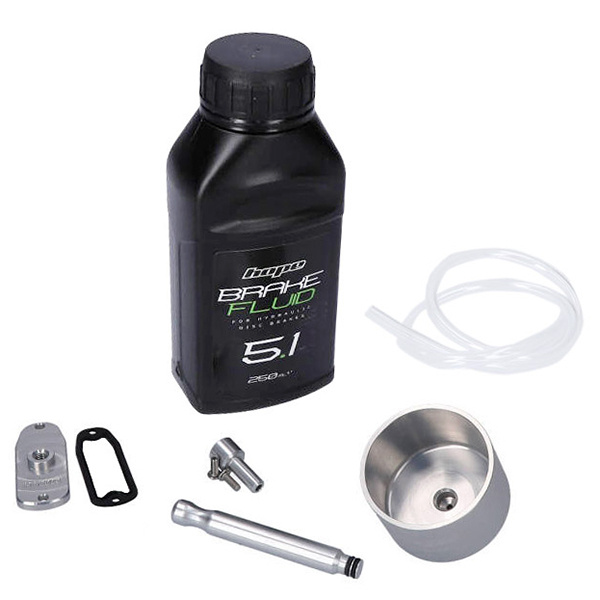
| Important caution | Exact kit contents can vary by SKU, so check whether fluid is included |
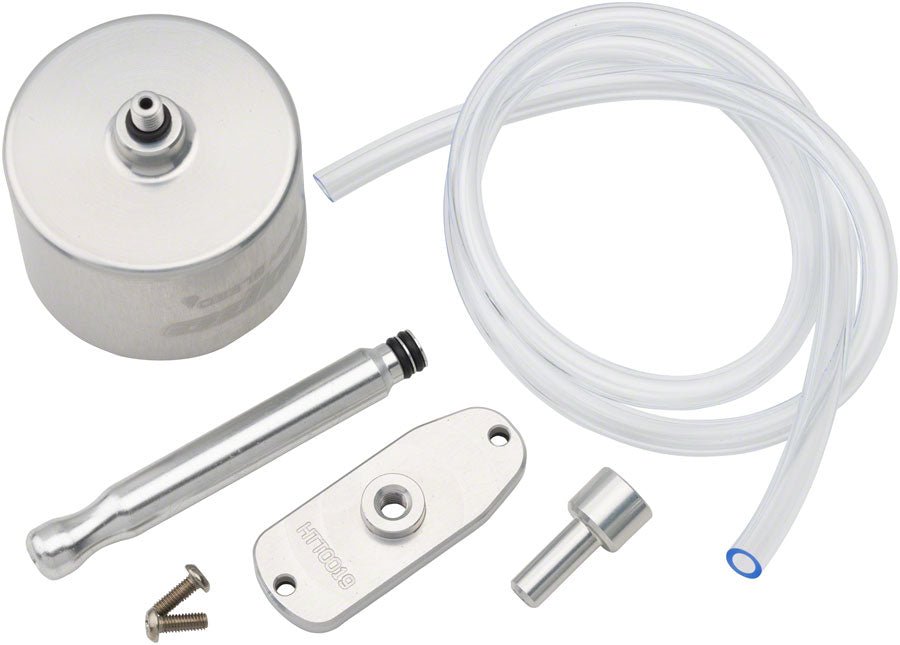
There are Tech 4 kit versions sold with and without fluid, so do not assume every listing contains the same bottle, hose, plate, and fittings. If you already have fresh DOT 5.1 fluid, the no-fluid version may be enough. If this is your first home bleed setup, confirm what is in the package before buying.
What Usually Goes Wrong
Most bad home bleeds are not because the kit is useless. They are usually caused by rushing one small step.
The easy one is letting the reservoir get too low. Hope’s easy-bleed instructions warn against letting the funnel level drop too far, because that can introduce air back into the system. If the whole point is removing bubbles, feeding fresh bubbles into the master cylinder is the worst possible trade.
Another common issue is lever angle. Hope’s Tech 4 instructions include flicking the lever and tilting the master cylinder left and right to move trapped air out of the reservoir area. That matches what riders often find in the real world: a brake can look bled, then release a few more tiny bubbles once the lever is angled differently.
There is also a useful rider lesson from a Reddit brake-bleed discussion: reach adjustment can hide small pockets of air around the lever mechanism. It is not a substitute for Hope’s instructions, but it is a good reminder that lever position matters during final checks.
Home Bleed Vs Bike Shop
If you ride a lot, bleeding brakes at home eventually pays for itself. The kit is especially sensible if you run Tech 4 brakes on more than one bike, regularly shorten hoses, ride in wet conditions, or travel for bike-park trips where brake feel matters.
A shop still makes sense if you are not confident with DOT fluid, if the brake is leaking, if the lever is pulling to the bar after multiple careful bleeds, or if the pistons are not moving evenly. A bleed kit handles air and fluid replacement. It does not replace mechanical inspection.
In a SingletrackWorld thread about bleeding Tech 4 V4 brakes, riders focused less on magic tricks and more on the usual practical details: use the proper easy-bleed setup, get the caliper/block arrangement right, and be patient at the end of the process. That is the useful takeaway. The kit helps, but the method still matters.
Who Should Buy It
Buy the Hope Tech 4 Easy Brake Bleed Kit if you:
- Own Hope Tech 4 brakes.
- Want to do routine brake bleeds at home.
- Have shortened a hose and need to cleanly bleed the system afterward.
- Prefer the correct reservoir fitting instead of adapting a generic kit.
- Are comfortable handling DOT brake fluid safely.
- Want a repeatable setup for future maintenance.
The kit makes the most sense for riders who keep bikes for a while. If your Tech 4 brakes will need service again next season, buying the correct kit once is easier than rebuilding a makeshift setup every time.
Who Should Skip It
Skip it if you do not own Tech 4 brakes. Hope has used different lever families over the years, and bleed caps/fittings are not something to guess. Match the kit to the brake.
Also skip it if you only need a one-off bleed and would rather pay a mechanic. DOT fluid is manageable, but it is not fun if you are working in a kitchen, on a carpet, or without a proper waste container.
If your brake problem is noise, weak bite, or vibration, inspect the pads and rotor first. Contaminated pads can feel like a hydraulic problem, but bleeding the brake will not clean the friction surfaces.
Setup Tips Before You Start
- Read Hope’s Tech 4 bleed instructions before opening the fluid.
- Remove the wheel and keep DOT fluid away from the rotor and pads.
- Use the correct bleed block or pad spacer for the job.
- Keep the reservoir supplied with clean fluid during the bleed.
- Close the bleed nipple before releasing the lever.
- Clean the caliper and lever area carefully afterward.
- Do a firm lever check before riding.
The final lever feel should be consistent, not slowly sinking to the bar. If it still feels wrong after a careful bleed, stop and check for leaks, piston problems, hose issues, or contamination instead of endlessly pushing more fluid through the same system.
FAQ
Does the Hope Tech 4 bleed kit work with every Hope brake?
No. Buy the kit that matches your brake family. This review is about the Tech 4 easy bleed kit, not every older Hope lever.
What fluid do Hope Tech 4 brakes use?
Hope’s Tech 4 bleed instructions specify DOT 5.1 fluid. Do not use mineral oil in a DOT brake system.
Does the kit always include brake fluid?
Not always. Some Tech 4 bleed kit listings include DOT fluid and some are sold without fluid. Check the exact SKU and package before ordering.
Can a bleed fix a spongy Tech 4 lever?
Often, yes, if the spongy feel is caused by air in the system. If the issue is a leak, contaminated pads, sticky pistons, or incorrect setup, a bleed alone may not fix it.
Can I use a generic bleed kit?
Sometimes riders adapt universal kits, but the dedicated Hope kit is cleaner because it is made around the correct Tech 4 reservoir setup. For repeated use, the dedicated kit is the easier buy.
Should I bleed brakes myself or use a shop?
Do it yourself if you are comfortable with careful fluid handling and following the official instructions. Use a shop if the brake is leaking, the lever still feels wrong after bleeding, or you are not set up to handle DOT fluid safely.
Bottom Line
The Hope Tech 4 Easy Brake Bleed Kit is a practical maintenance buy, not a performance upgrade. Its value is in making the Tech 4 bleed process cleaner, more repeatable, and less improvised.
If you own Tech 4 brakes and plan to service them yourself, the dedicated kit makes sense. If you are chasing brake noise, contaminated pads, or a leak, diagnose that first. A good bleed kit helps with air and fluid; it does not replace good mechanic judgment.