Hope V4 Vented Rotor Review: When the 3.3 mm Floating Disc Makes Sense
The Hope V4 Vented Rotor makes sense when heat is already the problem: long descents, bike-park laps, heavier rider-and-bike systems, e-MTBs, and Hope V4 brakes being pushed hard. It is not the rotor I would choose for every trail bike.
The rotor is thick, heavy, and purpose-built. Hope lists it as a 3.3 mm, 6-bolt-only vented floating rotor in 203 mm and 220 mm sizes. That is very different from a normal 1.8 mm lightweight rotor with a colored carrier.
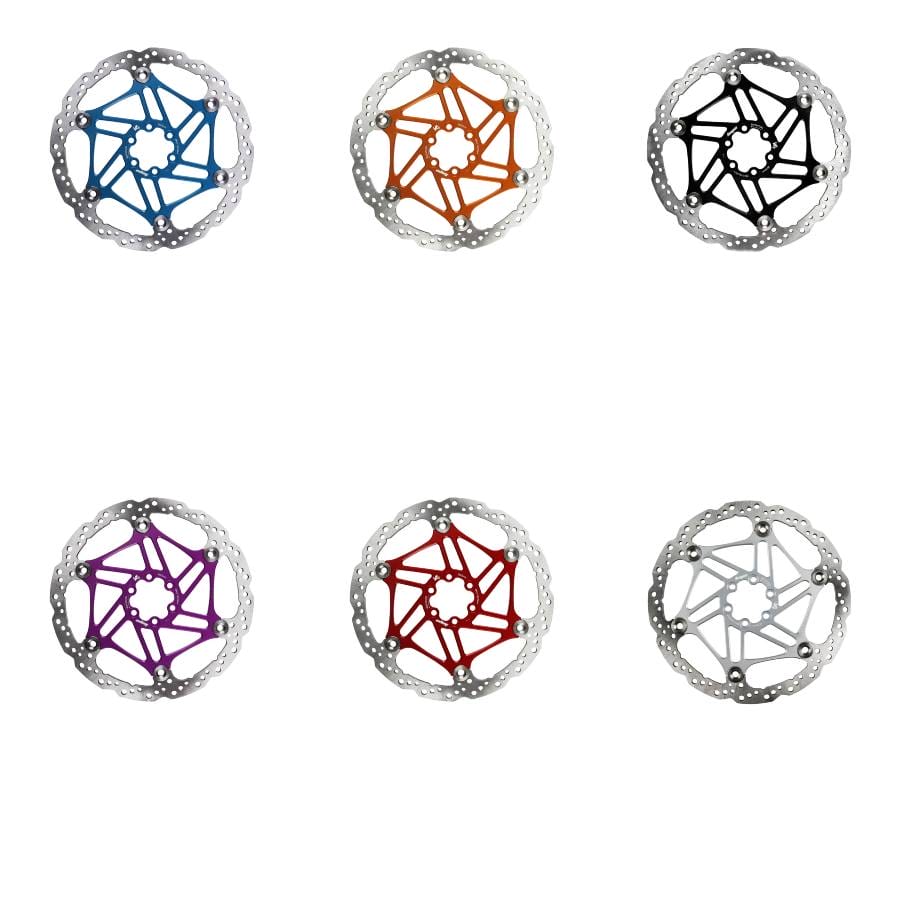
What makes the V4 Vented rotor different?
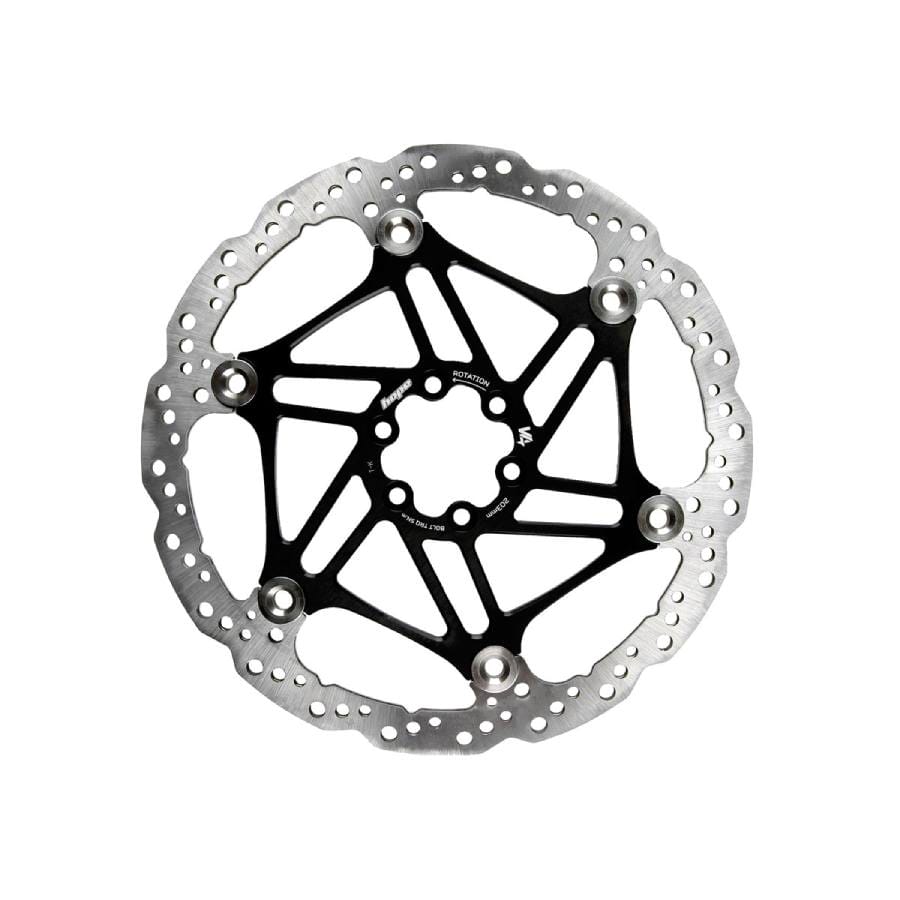
Hope’s Rotor Tech Book describes the vented rotor as its highest-performance option for harsh operating conditions. The design uses two braking faces with internal fins between them, so air can move through the rotor and help control heat. The outer braking assembly is joined to an aluminium carrier in a true floating design, allowing heat expansion instead of forcing everything to stay rigid.
The official numbers are the first thing to check: 203 mm or 220 mm only, 6-bolt only, 3.3 mm disc thickness, 2.9 mm minimum thickness, and listed weights of 248 g for 203 mm and 288 g for 220 mm. So yes, it is heavier than a standard rotor. That weight is part of the point.
| Rotor type | Hope V4 Vented floating rotor |
|---|---|
| Fitment | 6-bolt only |
| Sizes | 203 mm and 220 mm |
| Thickness | 3.3 mm new, 2.9 mm minimum according to Hope’s rotor table |
| Listed weight | 248 g for 203 mm, 288 g for 220 mm |
| Best match | Hope V4 brake setups, long descents, heavy bikes, and riders who need serious heat control |
| Main caution | Do not assume every non-Hope caliper clears the rotor thickness and floating hardware |
Who should consider it?
- Heavy riders or heavy bikes: more mass means more energy to turn into heat.
- Bike-park and long-descending riders: repeated hard braking is where a vented rotor can earn its keep.
- E-MTB riders: the extra bike weight makes heat management more important.
- Hope V4 owners: this rotor was designed around Hope’s V4 brake family, so fitment risk is lower than a random caliper mix.
A rider in a SingletrackWorld Hope V4 disc discussion described running V4 brakes with 203 mm vented rotors on a heavy e-MTB and said the setup had not let them down, while also pointing out the weight penalty. That is exactly how I would frame this rotor: it is impressive when the use case is hard enough, but the grams are real.
Who should skip it?
- Light trail riders: if you are not overheating brakes, you may only notice the cost and weight.
- XC or weight-focused builds: this is not the right place to save grams.
- Unknown caliper setups: verify 3.3 mm rotor clearance before ordering.
- Riders wanting a universal Hope rotor: the standard Hope floating rotor is easier to fit across more brakes.
Clearance is the common trap. In a Reddit thread about Hope floating rotors, riders mention rivet and caliper-body clearance issues on some non-Hope brakes, while others say the rotors work well when the caliper clears them. Treat that as rider experience, not a universal fitment chart.
Real rider feedback
The forum signal is pretty consistent: riders who are pushing Hope V4 brakes hard tend to like the vented rotors, while riders outside that use case often question the weight and price. In an NSMB discussion comparing Tech 4 V4 vented rotors with Mavens, one rider running 220 mm front and 203 mm rear V4 vented rotors called the setup excellent, while another framed the Hope setup more around heat resistance than outright maximum power.
There is also useful caution in a 200-220 mm rotor discussion: riders repeatedly point out that the 3.3 mm V4 vented rotor is not the same thing as an ordinary thin rotor. The practical takeaway is simple: measure first, especially if you are not using Hope V4 calipers.
Installation notes
Use clean 6-bolt hardware, tighten evenly in a star pattern, and align the caliper after the rotor is mounted. If you are changing rotor size, confirm the adapter. If you are changing from a thinner rotor, reset pad clearance and check for rub before bedding the brake in.
Hope’s guide also makes a good point about rotor size: bigger is not automatically better if the system never gets warm enough to work properly. For this rotor, the best size is the smallest one that keeps heat under control on your actual descents.
Alternatives worth considering
- Hope fixed 2.3 mm rotor: cheaper, stiff, durable, and less extreme.
- Hope standard floating rotor: lighter and more broadly compatible.
- Other 2.3 mm rotors: often a better match for non-Hope brakes with normal pad clearance.
Bottom line
The Hope V4 Vented Rotor is a smart upgrade when brake heat is already limiting your riding. For long descents, heavy bikes, e-MTBs, and Hope V4 brake setups, it has a clear job. For normal trail riding, it can be more rotor than you need.
An older SingletrackWorld vented rotor discussion puts the idea plainly: vented rotors are most useful when the rider, bike, and terrain create enough heat to justify them. If that does not sound like your riding, a lighter rotor is probably the better choice.
FAQ
Is the Hope V4 Vented rotor compatible with every brake?
No. It is 3.3 mm thick and has floating hardware, so caliper and frame clearance need to be checked.
Is it worth it for normal trail riding?
Usually not unless you are already overheating brakes or warping thinner rotors.
Does it add braking power?
It mainly helps consistency under heat. Power still depends on the brake, pad compound, rotor size, bed-in, and setup.
Should I choose 203 mm or 220 mm?
Use the smallest size that controls heat for your riding. A rotor can be too large if it never reaches a useful working temperature.
Related setup help
Heat control matters on long descents, but so does tire support. Use the MTB tire pressure calculator if the bike is skipping, harsh, or hitting rims on rough trails.