Hope EVO Drive-Side Crank Arm Review: Replacement Fit, Length Choice, and When It Makes Sense
The Hope Evo drive-side crank arm is the sort of part most riders only look for after something has already gone wrong. Maybe a crank arm is damaged, maybe pedal threads are done, maybe you want a different crank length without replacing the whole setup, or maybe you are rebuilding an existing Hope Evo crank setup piece by piece.
That matters because this is a replacement drive-side arm review, not the complete buying guide. If you are choosing the full crank, axle, chainring, and bottom-bracket setup, start with the Hope EVO crankset review. This drive-side arm only makes sense if you already live inside the Hope Evo ecosystem. If you do, it can be a neat and expensive-feeling way to keep a crankset alive. If you do not, it is the wrong starting point.
Quick Verdict
Buy the Hope Evo drive-side crank arm if you already own a compatible Hope Evo crankset and need a replacement arm, a different length, or a color swap without binning the whole system. Skip it if you are trying to build a full crankset from scratch on a budget, or if you are not already certain your crank, axle, bottom bracket, and chainring setup all match the Hope Evo platform.
The strongest reason to buy it is simple: it lets a high-end crankset stay serviceable instead of disposable. The biggest risk is assuming a single replacement arm solves broader fitment issues when the real problem is bottom-bracket width, axle choice, chainline, or frame clearance.
What This Replacement Arm Actually Is
This is a replacement drive-side arm for the Hope Evo crank system. It is not a complete crankset, not a bundled axle-and-arm kit, and not a universal arm for random 30 mm spindle cranks. For the full platform decision, use the Hope EVO crankset review.
Hope describes the Evo crankset platform as lighter and stiffer than the previous Hope design, and it uses a self-extracting axle and arm interface that simplifies fitting and removal compared with the older system. You can see that on Hope’s official Evo crankset page.
So the real question is not “is this a nice crank arm?” It is “do I already have the correct Evo system around it?”
Why Someone Buys a Replacement Drive-side Arm
There are a few legitimate reasons to buy one:
- the original arm is damaged by a strike or crash;
- the pedal threads are worn or ruined;
- you want to change crank length without replacing everything else;
- you want to keep an existing Hope Evo setup going rather than replacing the full crankset;
- you are doing a cosmetic rebuild and want a specific colour or fresh arm.
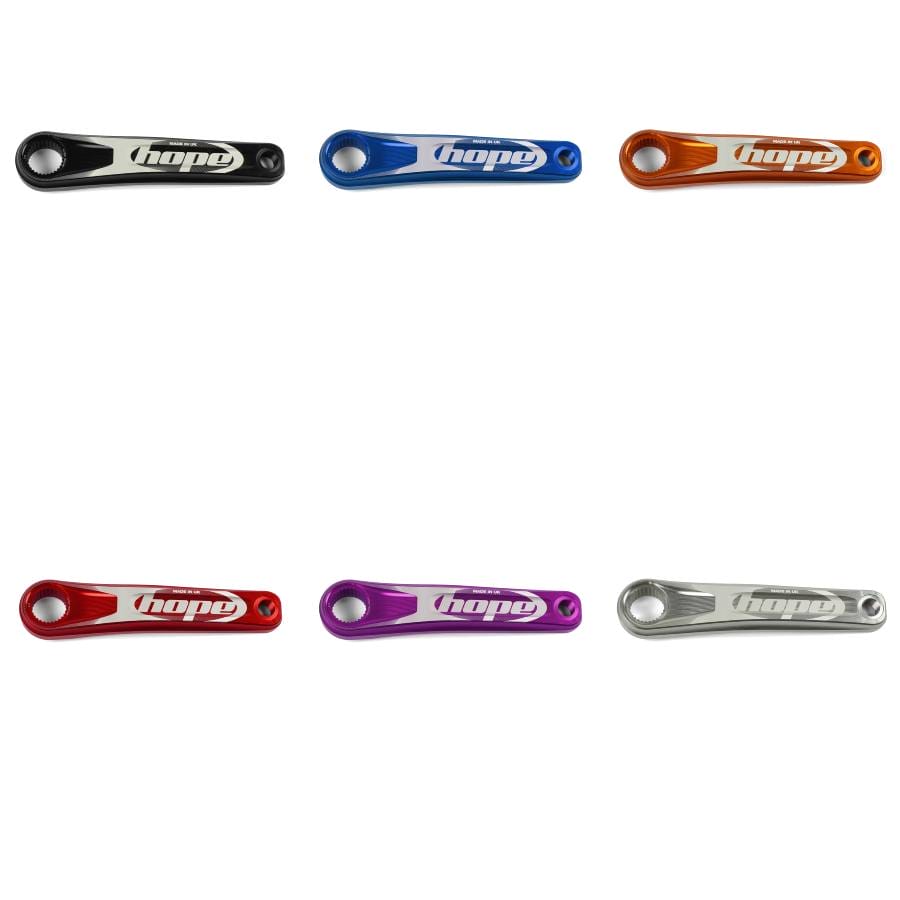
That last point is very Hope. The colour range is part of the appeal, and the matching product data shows colours including black, blue, orange, purple, red, silver, and smoke, with arm lengths including 135, 155, 165, 170, and 175 mm.
The Fitment Checks That Matter
This is where a lot of crank-arm purchases go sideways.
Hope’s crank installation guide says the bottom bracket must use a 30 mm bearing internal diameter, and it also calls out over-bearing width checks because the crank system depends on the correct overall spacing once the bottom bracket is installed. That official guide is here: Hope crank installation guide.
For fitment, that means:
- the replacement arm needs to match the Hope Evo platform;
- the axle and bottom bracket have to be the correct Hope-compatible setup;
- your frame standard still matters;
- chainring offset and axle choice still affect chainline and clearance.
A replacement arm does not erase any of those variables. It only replaces one part of the system.
Length Choice Is the Real Buying Decision
For most riders, the important choice is not color. It is crank length.
The available lengths cover a wide range, from very short 135 mm options through 155, 165, 170, and 175 mm. That is useful because Evo cranks attract riders who care about pedal clearance, shorter cranks for aggressive riding, or just keeping the left and right sides consistent when one arm needs replacement.
If you are replacing a damaged arm, the default move is simple: match the current length exactly. If you are trying to experiment with crank length, be careful. A single replacement arm is not a cheap shortcut if it leaves you needing other parts to keep the drivetrain and bike fit coherent.
Chainline and Clearance Are Not Automatic
One of the practical warnings around Hope Evo cranks is that frame clearance and chainline can get tight depending on the full setup, especially when riders mix chainrings, chain guides, shims, or spiderless configurations.
That shows up in rider discussion too. In a Pinkbike Hope Evo fitment thread, a rider described chainline and chain-guide clearance feeling too close for comfort after installing an Evo crank with a spiderless setup. That does not prove the crank is flawed. It does show that a Hope Evo setup is still a system, not a magic fix.
So if your current bike already has awkward clearance, buying a fresh drive-side arm alone may not solve the real problem.
Why the Evo Platform Is Still Attractive
The main appeal of the Hope Evo platform is not that it is cheap. It is that it is beautifully machined, serviceable, available in multiple lengths and colors, and still supported with official documents and replacement parts.
Singletrack World’s long-term Hope Evo 155 mm review also highlights what riders tend to like about the Evo generation: better interface design than the older Hope crank, a very high finish quality, and the general feeling that it is a serious premium alloy crank rather than a throwaway part.
That matters here because a replacement drive-side arm only makes sense if the whole platform is worth preserving. For many Hope owners, that is exactly the point.
Who Should Buy It
This part makes sense for:
- existing Hope Evo crank owners with a damaged drive-side arm;
- riders changing from one Evo crank length to another within the same system;
- riders rebuilding a Hope bike and trying to keep the Hope drivetrain aesthetic;
- mechanics or owners who prefer repair over full replacement.
If that is you, a genuine replacement arm is cleaner than trying to bodge together something incompatible.
Who Should Skip It
Skip it if:
- you do not already run a Hope Evo crank system;
- you are unsure what axle or bottom bracket your bike uses;
- you are trying to fix chainline or clearance problems without diagnosing them first;
- you need the cheapest possible route back onto the trail;
- the real issue is the whole crankset, not just one arm.
This is also an easy part to overbuy. If your current crank is fine and you are just bored, this is a very expensive way to scratch that itch.
Install and Ownership Notes
Before buying, check:
- exact Hope Evo platform compatibility;
- current crank length;
- bottom bracket type and 30 mm spindle compatibility;
- axle and chainring arrangement;
- whether the replacement is really solving a damaged arm problem and not masking a wider drivetrain fit issue.
There is also a lighter ownership note hiding in the background: even premium crank systems sometimes confuse people on preload tools and setup details. A small Reddit bikewrench thread about the Hope Evo end-cap tool is a reminder that replacement parts are easiest to own when you already understand the whole system around them.
FAQ
Is this a complete Hope Evo crankset?
No. This review is about the replacement drive-side arm only, not a complete crankset package. The full crankset buying decision is covered in the Hope EVO crankset review.
Will it fit any 30 mm spindle crank?
Do not assume that. This is a Hope Evo-system part, and crank, axle, and bottom-bracket compatibility still need to match the Hope setup.
Can I use it to change crank length?
Yes, that is one of the sensible reasons to buy it, but only if the rest of your Evo setup remains compatible.
Does a new drive-side arm fix chainline problems?
Not by itself. Chainline depends on the whole crank, axle, chainring offset, bottom bracket, and frame combination.
Is it worth buying instead of replacing the full crankset?
If the rest of the Hope Evo system is healthy, yes, that is exactly the point. If the whole crank system is wrong for the bike or badly worn, a single arm may not be the smart spend.
Bottom Line
The Hope Evo drive-side crank arm is a niche replacement part, but it is a useful one. It lets a premium crank system stay alive, and that is better than replacing a full setup just because one side is damaged or the length choice has changed.
The catch is that it only makes sense inside the right system. If you already run Hope Evo cranks and know your fitment, it is a sensible technical buy. If you do not, start by checking the whole crank and bottom-bracket picture before spending money on one arm.