Hope Pro 5 Shimano HG Steel E-Bike Freehub Review: 54 POE, Cassette Bite, and Fitment
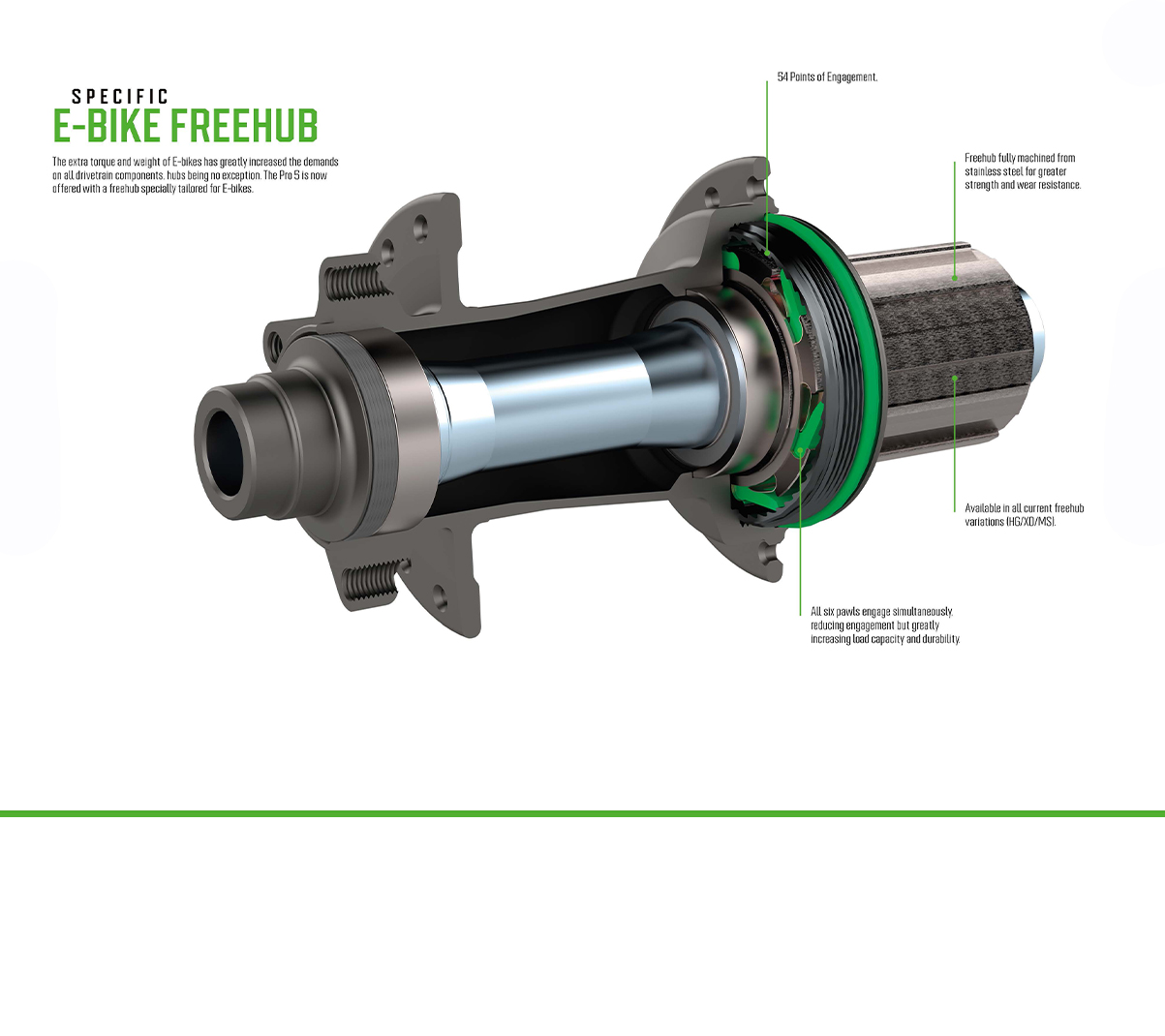
You order a Hope Pro 5 steel e-bike freehub marked HG and 54 POE, remove the old driver, then discover that the pawl count does not match the diagram you found online. That is now a legitimate identification problem: Hope’s document library contains an earlier HUB556 exploded drawing with six pawls and a separate 2026 HUB556 drawing with four, even though both identify the assembly as the E‑BIKE_HG_54.
The part reference alone therefore does not settle which internal revision is in your hand. Before fitting it, match the cassette interface, assembly label, pawl and spring quantity, bearing layout and supplied drive-side spacer to the current drawing. This assessment uses Hope’s technical documents and clearly attributed owner reports; HometownBikes has not installed or tested this freehub.
Hope Pro 5 e-bike freehub versions: the HUB556 conflict
Hope’s current hub-document library lists both “Pro 5 Shimano E‑Bike Freehub (54 POE)” and “Pro 5 E‑Bike Freehub Body HG 2026.” Their component lists are substantially similar, but the pawl quantities differ.
| Document | Assembly reference | Pawls and springs shown | What it means |
|---|---|---|---|
| Earlier E‑Bike HG 54 drawing | HUB556 | Six HUB559 pawls; six HUB561 HD springs | Use only when it matches the physical assembly or Hope confirms it applies. |
| HG 2026 drawing | HUB556 | Four HUB559 pawls; four HUB561 HD springs | This is the current explicitly dated HG e‑bike document. |
Both drawings specify a 17 × 28 × 7 inner bearing, a 15 × 28 × 7 outer bearing, the HUB1018‑34 freehub seal, HUB1018‑53 barrel spacer and alternative drive-side spacers for X12, 12 mm and QR applications. Neither drawing publishes a freehub assembly torque. The safe conclusion is precise: Hope changed the documented pawl quantity, but the available drawings do not explain when the physical revision entered production or whether every market’s stock changed at the same time.
HG, Micro Spline and XD are separate purchases
“Shimano” does not identify every Shimano cassette interface. This page covers the steel Hyperglide body used by conventional Shimano HG-pattern cassettes. A Shimano 12-speed mountain cassette with a 10-tooth smallest sprocket normally uses Micro Spline, which requires Hope’s separate Micro Spline e-bike freehub. SRAM XD requires its own driver, and XDR fitment introduces another dimensional check.
| Cassette clue | Driver path | Decision |
|---|---|---|
| Shimano/SRAM HG-pattern cassette, commonly 8–11 speed | HUB556 HG family | Continue only after confirming the exact cassette model and spacer requirement. |
| Shimano MTB cassette with a 10-tooth smallest sprocket | Micro Spline e-bike body | Do not order the HG version. |
| SRAM Eagle cassette using XD | XD e-bike body | Do not order the HG version. |
| Hub is Pro 4, Pro 2 or another brand | Different freehub family | HUB556 is not the compatibility answer. |
The HG steel option earns its place when the cassette uses separate sprockets that can mark a softer aluminium body. Steel adds mass, but it resists this spline notching better. It cannot repair a loose cassette, incorrect lockring torque or missing cassette spacer, so diagnose those causes before replacing a driver that is merely marked.
54 POE is a load choice, not a downgrade score
The e-bike freehub uses 54 points of engagement, equal to about 6.7 degrees between pickup positions at the hub. Hope’s standard Pro 5 driver uses 108 points, about 3.3 degrees. A smaller number gives more crank movement before engagement, but engagement count alone does not rank the two bodies.
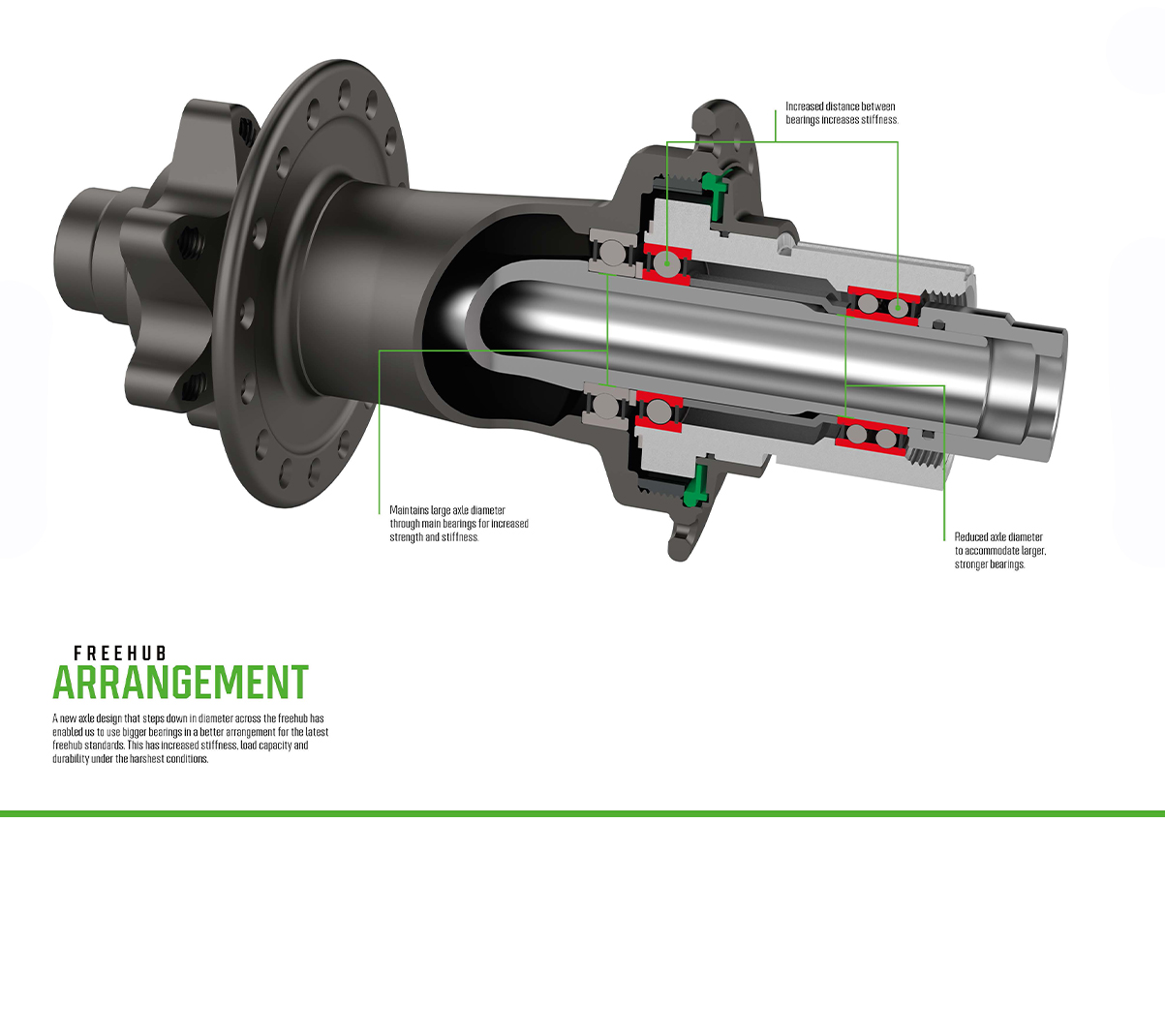
Hope describes the e-bike version as tailored for increased durability and load capacity. The complete Pro 5 Boost e-bike rear hub also uses a revised pawl system, a step-down axle and a labyrinth seal; those hub features should not be mistaken for components supplied with every replacement freehub body. The current 2026 four-pawl drawing means the old explanation that “all six pawls engage together” must not be repeated as universal current specification. What remains verified is the 54 POE classification, heavy-duty HUB561 springs, steel HG body on the e-bike product specification, and Hope’s decision to separate this assembly from the standard 108 POE driver.
Choose the 54 POE body when the motor-assisted application and correct HG cassette interface call for the e-bike part. Choose the standard 108 POE body when the hub, application and desired driver are standard Pro 5. Swapping solely to gain or lose pickup points ignores the material, spring and revision differences that define the assembly.
How to identify the part before opening the hub
- Read the interface: confirm that the cassette mounts to an HG spline, rather than Micro Spline or XD.
- Record the package and assembly reference: HUB556 is the drawing reference for the HG e-bike assembly, but record any suffix or barcode because HUB556 alone does not distinguish the two published pawl layouts.
- Use the dated document: compare the part with Hope’s “Pro 5 E‑Bike Freehub Body HG 2026” drawing.
- Count only after clean removal: the 2026 drawing specifies four HUB559 pawls and four HUB561 HD springs. Do not dismantle springs merely to satisfy an internet description.
- Match the drive-side spacer: the drawings identify HUB1018‑45 for X12, HUB1018‑44 for 12 mm and HUB1018‑42 for QR. The correct choice depends on the hub and axle arrangement.
- Stop on a mismatch: retain the packaging and contact Hope or the supplying dealer when the body, quantities or spacer do not match the current drawing.
A rider in a November 2025 EMTB Forums thread reported exactly this uncertainty after receiving a HUB557-labelled e-bike part whose apparent engagement and weight did not match expectations. Replies debated magnetism, pawl timing and possible packaging error without producing a manufacturer resolution. The useful lesson is the identification process: owner observation can reveal a mismatch, but it cannot determine the production revision.
Magnetism does not prove the body is aluminium
The same owner discussion questioned whether a non-magnetic body could really be steel. That test is inconclusive. Some stainless steels are weakly magnetic or effectively non-magnetic depending on alloy and processing. Hope’s e-bike product specification identifies steel freehub bodies, while the exploded drawing identifies components and dimensions rather than an alloy grade. Use the manufacturer’s part specification and purchase record; do not use a fridge magnet as the final material test.
Sound is also an unreliable identifier. One participant who had used both versions described the 54 POE body as sounding closer to a Pro 4 than the standard Pro 5. Grease quantity, spring condition, wheel construction and rotation speed all affect the noise. A different tone may justify inspection, but it does not prove that the wrong freehub was supplied.
The mechanic’s tray for bearing work
A routine body swap and a bearing replacement are different jobs. Keep the work area clean and account for the snap ring, 1 mm barrel spacer, seal, O-ring, pawls, springs and selected drive-side spacer shown in the drawing. The two cartridge bearings must be supported on the correct race during removal and pressing.
| Position | Verified component or tool | Specification |
|---|---|---|
| Inner freehub bearing | 17287 | 17 × 28 × 7 |
| Outer HG bearing | S15287 | 15 × 28 × 7 |
| Drive-side press tool | HTT197 | Pro 5 freehub bearing press tool, long |
| HG non-drive-side press tool | HTT199 | Pro 5 freehub bearing press tool, short, 11-speed |
| Complete tool set | HTTPro5 | Hope says the Pro 5 service tools are included in this kit. |
Hope’s service-tool chart assigns HTT197 and HTT199 to the HG body. The freehub drawings do not give a torque for pressing these bearings or seating the freehub body, so no numerical value should be borrowed from a cassette lockring, axle or older hub manual. Cassette and axle torque remain component-specific values from their respective instructions.
Replacement cost begins with diagnosis
A complete steel body can be justified when the HG splines are deeply notched, a bearing is damaged beyond economical service, the existing driver is the wrong cassette standard, or a verified e-bike conversion requires the 54 POE assembly. Cosmetic spline witness marks alone do not prove replacement is necessary.
Price the repair as a system: steel freehub assembly, any missing drive-side spacer, replacement seal or bearings, cassette tools, and labour if bearing pressing is required. Also compare the cost of replacing only documented service parts. Hope lists the pawls, heavy-duty springs, bearings, seal, snap ring and end caps or spacers individually in the drawing, which can avoid replacing a sound steel body for a smaller worn component.
If the existing hub is a standard Pro 5 148 mm Boost rear hub, establish whether the intended change is a cassette-interface conversion or an e-bike load conversion. For the wider generation differences, the Pro 5 versus Pro 4 comparison covers shell, engagement and service implications without treating the freehub as the whole hub.
The decision gate
- Buy the HG e-bike body when the hub is Pro 5, the cassette is confirmed HG, the application calls for Hope’s 54 POE e-bike assembly, and the current revision is identified.
- Buy Micro Spline or XD instead when the cassette interface requires it. The steel material and e-bike label do not override cassette fit.
- Service the existing assembly when the body is structurally sound and the fault is isolated to a listed bearing, seal, pawl, spring or spacer.
- Pause the installation when packaging, pawl quantity or spacer arrangement conflicts with the 2026 drawing. Record the markings and obtain confirmation against the exact production part.
The strongest reason to choose this freehub is specific: a Pro 5 e-bike application that needs an HG steel driver and Hope’s 54 POE load-oriented assembly. Its largest buying risk is equally specific. HUB556 appears on drawings with different pawl quantities, so the dated document and physical revision must be matched before the old six-pawl description is treated as current.