Hope Brake Pads Guide: Compounds, V4/E4 Fitment, and Bedding-In Notes
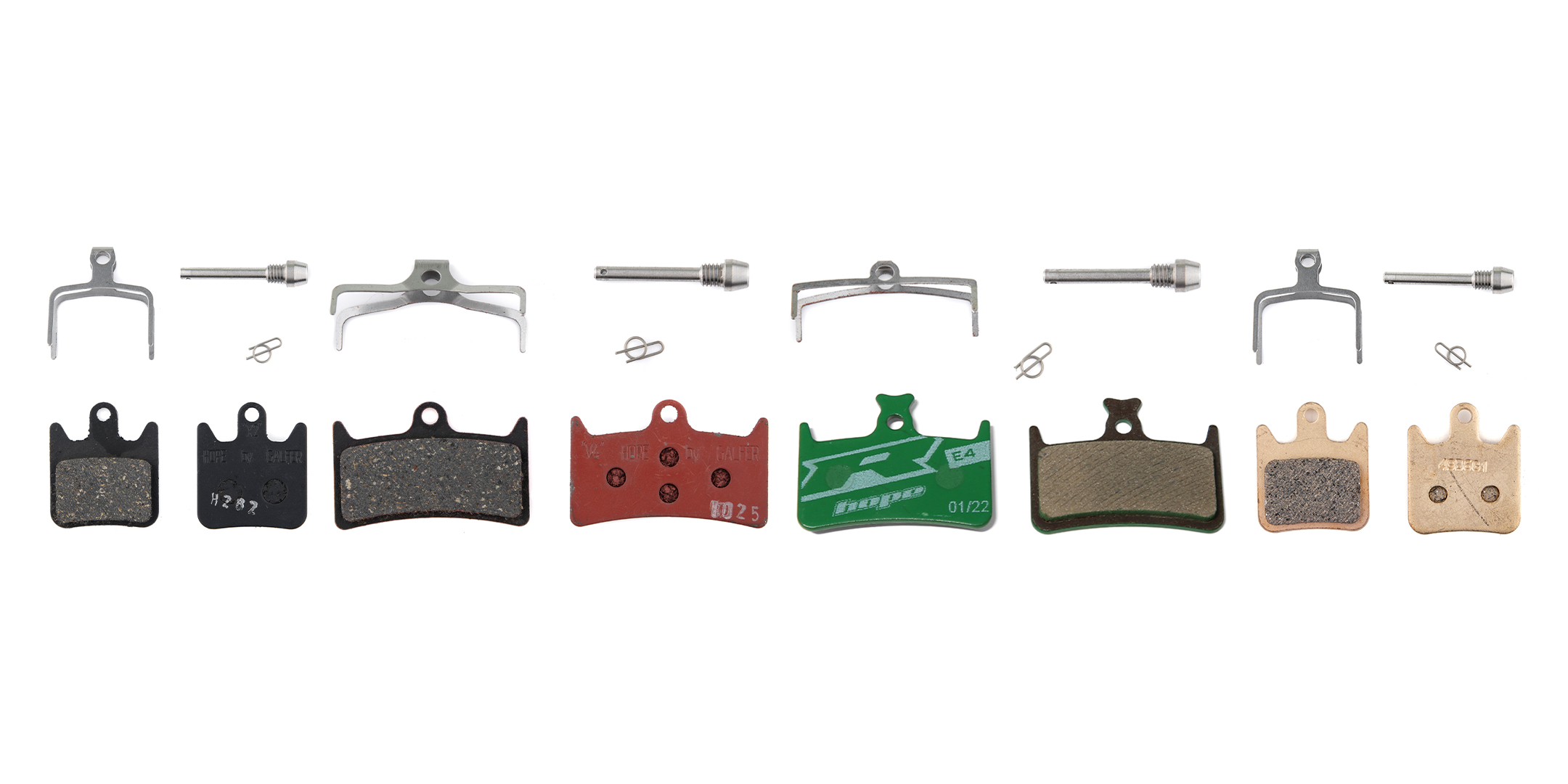
Hope brake pads look simple until you are trying to pick the right compound for a specific brake. The shape matters first, then the compound. A V4 pad does not become correct for an E4 just because both brakes say Tech 4, and a pad that feels excellent in dry trail riding may not be the one I would choose for a heavy e-bike, wet winter riding, or a long descent where heat is the real problem.
This guide keeps the decision practical: identify the caliper, choose the pad shape, then choose the compound for how the bike is actually ridden. Hope’s own brake pad page says its pads are available for current and older Hope brakes, with MTB compounds including Race, Standard, and Sintered, plus a Road compound for RX4+ calipers. The newer Hope brake pad usage guide adds the more useful part: which pad family fits which caliper and what the compounds are meant to do.
Quick answer
If you want the safest starting point for most mountain-bike use, choose the correct Hope pad shape for your caliper and start with an all-conditions or sintered-style compound. Go more aggressive only when the riding asks for it. Green Race pads are about power and quick bite. Gold Sintered pads are about heat, wet conditions, and durability. Purple e-bike pads are aimed at heavier and faster e-bike, enduro, downhill, and tandem use. Blue Road pads are for RX4+ road/gravel use, not general MTB calipers.
First: match the pad shape to the caliper
The biggest mistake is shopping by brake generation instead of caliper family. Hope’s 2026 pad guide lists HBSP303 for V4, TR4, and GR4 calipers, and HBSP323 for E4, RX4+, RX4-SH, and Mono M4 calipers. X2 uses HBSP237. That means Tech 4 V4 and Tech 4 E4 do not use the same pad shape even though both share the Tech 4 lever family.
| Hope caliper family | Pad family from Hope guide | Practical note |
|---|---|---|
| V4, TR4, GR4 | HBSP303 | Use this family for modern Hope heavy-duty four-piston gravity calipers. |
| E4, RX4+, RX4-SH, Mono M4 | HBSP323 | E4 and RX4-related calipers share this pad family in Hope’s guide, but compound choice still depends on use. |
| X2 | HBSP237 | For two-piston X2-style calipers, not V4/E4 calipers. |
| Trial Zone | HBSP170 | Specific trial brake pad family. |
Hope pad compound options
Hope’s guide explains the compound choice by braking power, wet-condition performance, fade resistance, and durability. The short version is below.
| Compound | Color | Best use | Tradeoff to expect |
|---|---|---|---|
| Road Organic | Blue | Road riding with RX4+ style use | Not the default MTB pad choice. |
| Sintered | Gold | CX, XC, trail, all-mountain, enduro, downhill, tandem, e-bikes | Longer bedding-in and a firmer, more durable feel. |
| E-bike Organic | Purple | E-bikes, enduro, downhill, tandem | Built for higher weight and speed loads, but not necessary for every normal trail bike. |
| All Conditions Organic | Red | Wet, muddy, all-year riding across XC, trail, enduro, and downhill | A sensible mixed-weather option when you do not want a full sintered feel. |
| Racing Organic | Green | XC, trail, enduro, downhill where power and short bed-in matter | Performance-focused; durability and noise can depend heavily on conditions. |
Which Hope brake pads should you choose?
For a normal trail bike, I would not overthink the first set. Pick the correct shape and choose an all-conditions organic or sintered pad depending on weather, descent length, and how hard you are on brakes. If you ride mostly dry local trails and want bite without much drama, an organic all-conditions style pad makes sense. If you ride wet, gritty, steep, or long descents, sintered becomes easier to justify.
For a Hope Tech 4 V4, TR4, or GR4 setup, the pad decision matters more because the brake is often on a heavier or harder-ridden bike. If you are reading this because your V4s still feel weak, do not immediately blame the pad compound. Check bedding-in, contamination, rotor condition, caliper alignment, and bleed quality first. A Reddit discussion about pads and rotors for Tech 4 V4 brakes shows the kind of rider feedback that comes up often: riders point first to bedding-in, glazing, contamination, and rotor choice before assuming the V4 lacks power.
V4 pads vs E4 pads
V4 and E4 pads are not interchangeable. This is the part worth repeating. The V4 caliper family uses the HBSP303 pad family in Hope’s guide. E4 uses HBSP323. If you are buying pads for a Tech 4 brake, read the caliper name, not only the lever name.
That also matters when comparing brake reviews. A rider talking about a Tech 4 E4 pad does not automatically tell you what will happen on a Tech 4 V4. The caliper, rotor, bike weight, and heat load are different enough that pad advice needs context.
Wet weather, noise, and rider feedback
Real rider feedback is mixed, which is normal for brake pads. In a SingletrackWorld discussion about Hope brake pad compound experience, riders compare green, purple, red, and aftermarket options with different opinions on power, wet performance, and value. That kind of thread is useful because it reminds you that pad feel is not only compound marketing. Rotor type, bedding-in, mud, rider weight, and expectations all change the answer.
If the brake squeals, pulses, or feels underpowered after a pad swap, do not keep changing compounds blindly. Check for contamination, glaze, uneven rotor deposits, poor bedding-in, or caliper alignment. Pads are part of the system, not the whole system.
Bedding-in matters
Hope’s pad guide is clear that new pads need bedding in. It says skipping that process can glaze the pad surface and hurt friction performance. The process is not complicated: moderate speed, gentle brake applications without fully stopping, release, let the bike roll back up to speed, and repeat until braking power builds. Sintered pads usually take longer to bed in than organic pads.
This is one of the easiest ways to ruin an otherwise good brake setup. If the first ride after a pad change is a hard, stop-start, heat-heavy descent, the pad can feel worse than it should. Give the compound a fair start before judging it.
Rotor choice changes pad feel
Pad choice and rotor choice are linked. A heavy rider on a long descent with a small, light rotor is solving the wrong problem if the only change is a new pad compound. The pad has to work with rotor diameter, rotor thickness, cooling, and brake setup.
For Hope’s thick V4-style rotor path, our Hope V4 Vented Rotor review covers when that 3.3 mm heat-control route makes sense. For many trail bikes, a normal rotor and a sensible compound will be cleaner than jumping straight to the heaviest heat-management setup.
When to replace Hope brake pads
Replace pads when the friction material is worn close to the backing plate, when the pad is contaminated and cannot be recovered, when the surface is badly glazed, or when the compound is wrong for the riding. Also check spring clips, pad pins, rotor condition, and whether both pistons are moving correctly. Hope says its pads include the spring clip and pin, which is useful because those small parts should not be ignored during a pad refresh.
Bottom line
The best Hope brake pad is the one that matches the caliper first and the riding second. For V4, TR4, and GR4, start with the HBSP303 family. For E4 and RX4-related calipers, look at HBSP323. Then choose the compound around heat, weather, durability, and bike weight.
If you want one simple rule: do not buy the most aggressive compound just because it sounds faster. Choose the pad that fits your brake, bed it in properly, and judge it with the rotor and setup in mind.
FAQ
Do Hope V4 and E4 brakes use the same pads?
No. Hope’s pad guide lists V4, TR4, and GR4 under HBSP303, while E4, RX4+, RX4-SH, and Mono M4 are listed under HBSP323.
Which Hope pads are best for wet riding?
Hope’s all-conditions organic red compound is aimed at wet and muddy riding, while sintered pads are also strong when heat, durability, and all-weather consistency matter. The better choice depends on the brake, rotor, terrain, and rider preference.
Why do new Hope pads feel weak?
Common reasons are poor bedding-in, contamination, glazing, rotor issues, a poor bleed, or caliper alignment. Hope specifically warns that skipping bedding-in can glaze pads and reduce braking performance.
Are purple Hope pads only for e-bikes?
Hope describes the purple organic compound as adapted for the increased weight and speed of e-bikes, with enduro, downhill, and tandem use also listed. That does not mean a normal trail bike cannot use them, but it does mean they are aimed at higher-load riding.
Should I change rotors when changing pads?
Not always. But if the old rotor is contaminated, badly worn, too small for the riding, or mismatched to the heat load, a pad swap alone may not solve the problem.