Hope F22 vs F20 Pedals: Platform Shape, Grip, Pins, Service, and Upgrade Value
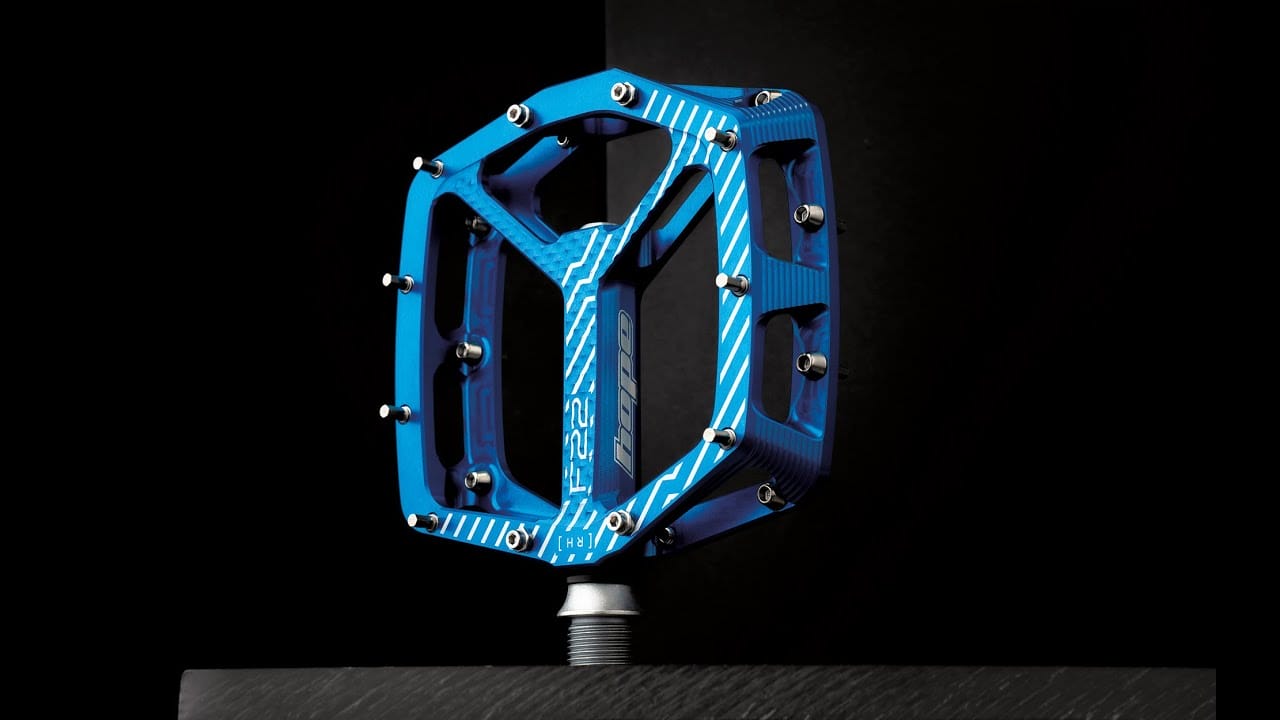
The Hope F22 is the better pedal for most riders buying a new Hope flat pedal today. The F20 still matters if you already own a pair, find a clean used set, or need service parts, but the F22 is the current platform with the bigger practical changes: more shoe support, a more concave feel, revised pins, and a stronger modern trail/enduro focus.
This comparison is not about pretending the F20 was bad. The F20 built Hope’s flat-pedal reputation around a machined body, serviceable internals, and long-term ownership. The F22 keeps that service logic but updates the part riders actually feel underfoot.
Quick Verdict
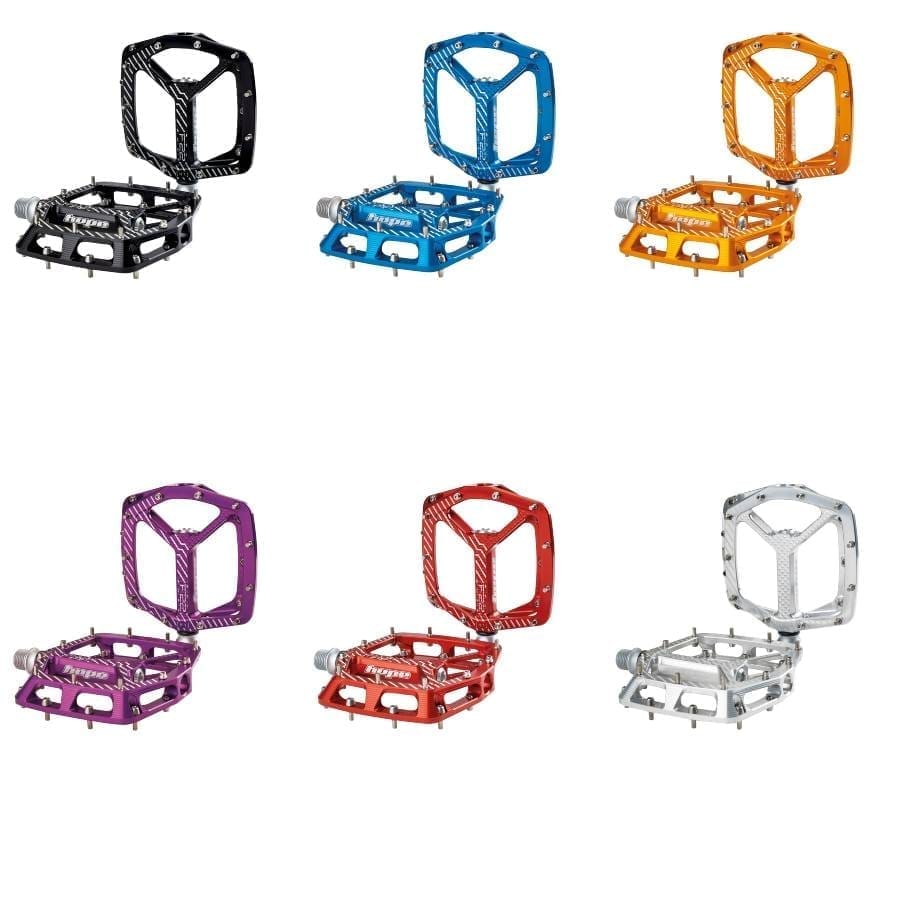
Choose the Hope F22 if you are buying new, want more grip and support than the older F20 shape, or ride modern trail, enduro, downhill, or e-MTB terrain on flat pedals. Hope’s F22 product page says the F22 keeps the proven F20 internal layout while adding a larger concave dome profile, reverse-loading pins, internal and external sealing, a revised axle, and a fully serviceable rebuildable design.
Keep or service the F20 if you already own it, like the platform feel, and the pedal is mechanically healthy. Do not upgrade just because the F22 exists. Upgrade because you want the newer shape, more support, stronger grip setup, or a fresh pair of pedals anyway.
F22 vs F20 At A Glance
| Question | Hope F22 | Hope F20 |
|---|---|---|
| Best role now | Current Hope flat-pedal choice | Legacy pedal, existing-owner and used-market option |
| Platform feel | Larger, more supportive, more concave approach | Older shape, less modern by current flat-pedal standards |
| Grip setup | Longer adjustable reverse-loading pins with shorter center pins | Older pin layout and platform feel |
| Internals | Three cartridge bearings and an IGUS bush | Same internal idea carried forward into the F22 |
| Serviceability | Fully serviceable and rebuildable | Worth servicing if the body and axle are still good |
| Best buyer | New buyers and riders wanting better shoe support | Owners who like the pedal and want to keep it running |
The Main Difference Is Platform Shape
The F20 was serviceable and well made, but the flat-pedal market moved on. Riders now expect more support, more concavity, better pin tuning, and a platform that feels secure with modern flat-pedal shoes.
The F22 answers that. Hope describes the F22 as using a larger concave dome profile with an asymmetric and tapered shape. That is the change most riders will notice first, because platform support affects how stable the shoe feels on rough ground, landings, and long descents.
Grip And Pins
The F22 uses longer adjustable pins with a reverse-loading design. Reverse-loading pins matter because the pin can still be removed from the back of the pedal if the exposed face gets damaged by rocks. Hope also uses shorter pins toward the center of the pedal to help create the concave foot feel.
This is where the F22 has the clearer advantage. The older F20 can still work if you like it, but the F22 gives more modern pin tuning and a more secure platform. Public rider comparisons also tend to discuss the F22 alongside other premium grip-focused pedals. In a Reddit thread comparing the F22 with Atlas, Burgtec, and Wolf Tooth pedals, the discussion centers on grip, platform preference, and shoe feel rather than brand name alone.
Internals And Service
This is where the F20 still deserves respect. Hope did not throw away the old internal idea. The F22 keeps the proven F20-style internal layout with three cartridge bearings and an IGUS bush, then adds internal and external sealing and a revised axle design.
That means the decision is not “F20 bad, F22 good.” A healthy F20 can still be worth servicing. But if you are buying new, the F22 gives the same serviceable ownership logic with a more current body and pin arrangement.
Weight And Build
Hope lists the F22 at 360g per pair. For a rebuildable alloy flat pedal, that is reasonable, but weight should not be the only reason to choose it. The better reason is that the F22 combines serviceable internals with a platform that better matches current flat-pedal expectations.
If you only want the lightest or cheapest pedal, Hope probably is not the cleanest answer. If you want a metal pedal that can be kept alive with bearings, bushings, pins, and service parts, Hope starts to make more sense.
Should F20 Owners Upgrade?
Upgrade from F20 to F22 if your current pedals are worn, you want more grip, you want a more supportive platform, or you already planned to replace pedals. The F22 is the more modern shape and the easier recommendation for a fresh purchase.
Do not upgrade if your F20 pedals are healthy, you like the way they feel, and you are not missing grip or support. In that case, service parts may be the better spend. Pedals are personal contact points, and a newer design is not automatically better for your feet if you already like the old one.
What Rider Feedback Suggests
SingletrackWorld’s F22 riding impressions frame the F22 as a meaningful update to Hope’s flat pedal line, especially around grip and platform feel. Treat that as one publication’s riding impression, not a universal lab result.
The broader feedback pattern is practical: riders who wanted a more modern Hope flat pedal tend to see the F22 as the answer. Riders happy with F20 serviceability may not need to rush. Shoe rubber, foot size, pin setup, and riding terrain still matter.
Who Should Choose F22?
Choose the F22 if you are buying new, ride flats seriously, want better support than the old F20, or care about rebuildable internals. It is the better Hope flat pedal for most current trail, enduro, downhill, and e-MTB use.
The F22 also makes sense if you are already considering premium alloy pedals from other brands. In that group, Hope’s strongest argument is serviceability plus the improved platform, not just color choice.
Who Should Stay With F20?
Stay with F20 if you already own a good pair, like the shape, and only need service parts. The F20 still makes sense as a maintenance decision. It is less convincing as a fresh purchase unless price, availability, or personal preference points that way.
If you find a used F20 set, inspect the axle, bearing play, pin condition, pedal body damage, and service-part availability before buying. A cheap used pedal with damaged pins and rough internals can become poor value quickly.
Related Reading
For the product-specific current-pedal review, read the Hope F22 pedals review. For the wider family decision, including Union clipless options, read Are Hope pedals good?.
Bottom Line
The Hope F22 is the better choice for most new buyers. It keeps the serviceable Hope pedal logic while fixing the main reason the F20 started to feel dated: platform support and grip. If you are building or refreshing a bike around premium flat pedals, F22 is the Hope model to start with.
The F20 still has a place, but mostly for owners, used buyers, and riders who already know they like it. Service a good F20. Buy the F22 if you want the current Hope flat pedal.
FAQ
Is the Hope F22 better than the F20?
For most new buyers, yes. The F22 has a more modern platform shape, improved pin setup, and updated axle while keeping the serviceable internal approach from the F20.
Should I replace my Hope F20 pedals with F22?
Replace them if you want more grip, more support, or your F20 pedals are worn enough that replacement makes sense. If your F20 pedals are healthy and you like the feel, servicing them can be enough.
Do the Hope F22 pedals use the same internals as F20?
Hope says the proven internals from F20 remain, with three cartridge bearings and an IGUS bush used in the F22 layout.
Are Hope F20 pedals still worth servicing?
Yes, if the pedal bodies and axles are in good condition and you like the platform. Serviceability is one of the reasons Hope pedals are still worth maintaining.
Are the Hope F22 pedals clipless?
No. The F22 is a flat pedal. Hope’s clipless pedals are in the Union range.