This Hope GR4 review is for riders trying to work out whether the Tech 4 EVO GR4 is genuinely the right brake, or whether a Tech 4 V4, TR4, or smaller trail brake still makes more sense. The GR4 is Hope’s newer maximum-power gravity brake, aimed at downhill, enduro, e-bike, and other heavy-load riding where heat, speed, and repeated braking matter more than saving a few grams.
That does not automatically make it the right brake for every mountain bike. The GR4 is powerful, serviceable, and very adjustable at the lever, but it also changes a few assumptions that riders may have from the older Tech 4 V4. The big one is rotor compatibility: Hope says the EVO GR4 is not compatible with vented rotors, so this is not a simple V4-plus-vented-disc upgrade path.
This research review uses Hope’s current GR4 product documentation, attributed independent tests and linked owner discussions. HometownBikes has not ridden or workshop-tested this brake, so manufacturer claims and rider observations are identified as such.
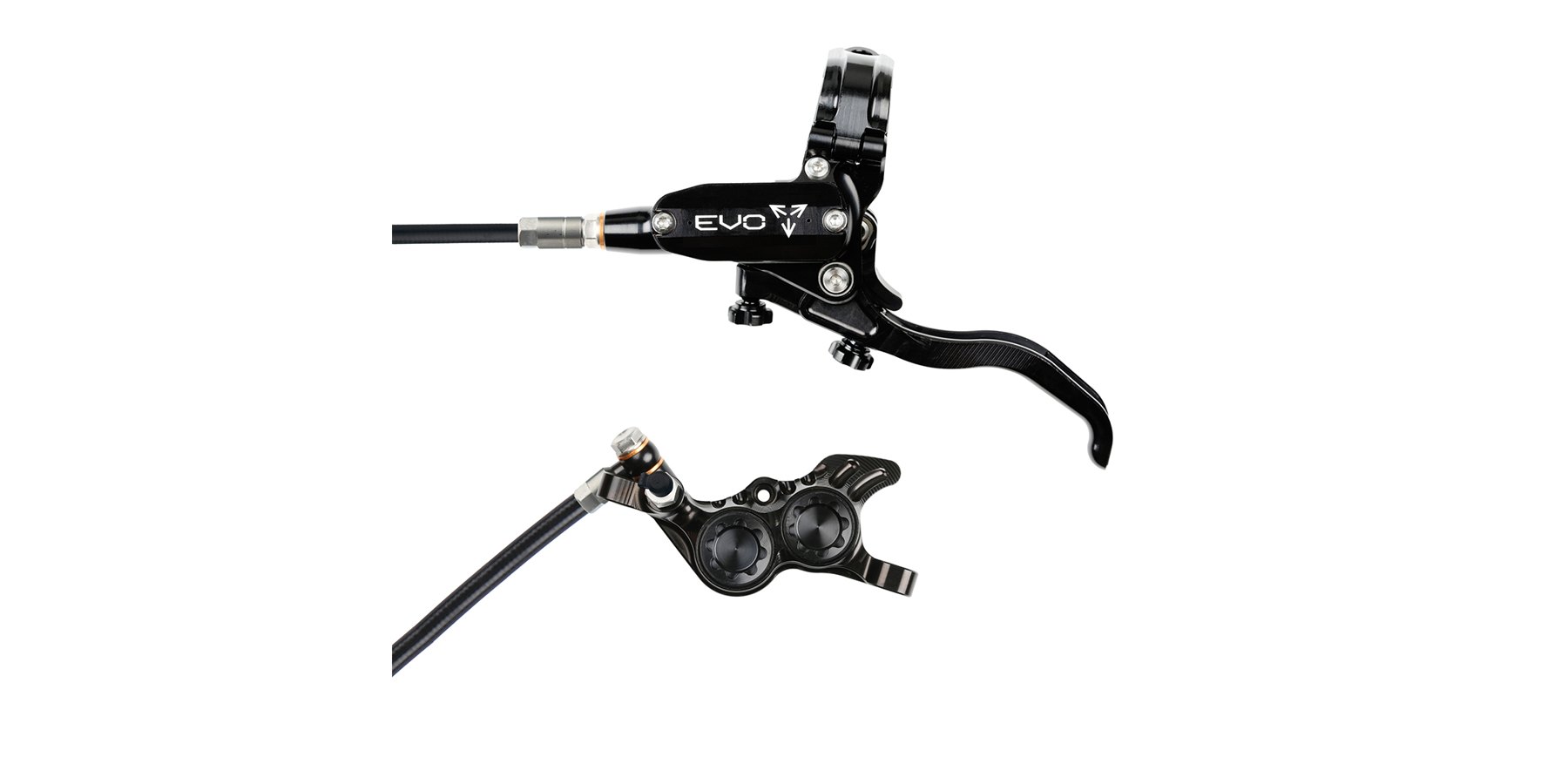
Quick verdict
The Hope Tech 4 EVO GR4 makes the most sense for riders who already know they want more brake than a normal trail setup: fast enduro riders, downhill riders, heavier riders, e-MTB riders, and anyone doing repeated steep descents where heat management and consistent power matter.
It is less convincing as a casual upgrade for ordinary trail riding. If your current brakes are already easy to control, quiet, and strong enough, the GR4 may add cost and setup sensitivity without solving a real problem. If you are choosing between Hope’s current gravity options, the GR4 is the maximum-power choice, while the TR4 sits as the less extreme gravity/trail-enduro option.
Fast answer: Hope GR4 vs V4
| Choose GR4 if | You are starting fresh and want Hope’s newest maximum-power gravity brake for downhill, enduro, e-bike, heavy riders, or long descents. |
|---|---|
| Choose V4 if | You already have a strong V4 setup, want the older proven platform, or specifically want to stay in the V4/vented-rotor path. |
| Big compatibility warning | Hope states the EVO GR4 is not compatible with vented rotors. |
| Best search shorthand | GR4 is the newer maximum-power option; V4 is still the familiar heavy-duty Hope brake. |
What changed from Tech 4 V4?
Hope describes the EVO family as a refinement of Tech 4 rather than a complete reinvention. On the Hope EVO information page, the company points to larger piston area, more lever adjustment range, revised bore caps, and brake-specific changes across the new EVO range.
For the GR4 specifically, Hope’s EVO GR4 product page positions it as the maximum-power gravity brake. Compared with the Tech 4 V4, the important practical differences are the larger-piston power focus, improved caliper stiffness, revised bore-cap clearance, and the clear warning that GR4 does not work with Hope’s vented rotors.
Key specs and fitment details
| Brake type | Hydraulic four-piston disc brake for gravity, enduro, downhill, e-bike, and high-load MTB use |
|---|---|
| Caliper | One-piece GR4 caliper with larger pistons than the previous V4 direction |
| Lever | EVO lever with tool-free reach and bite-point adjustment |
| Fluid | DOT brake fluid system |
| Rotor note | Hope states the GR4 is not compatible with vented rotors |
| Hose options | Standard black hose or braided hose, depending on the version |
| Best use | Downhill, enduro, e-MTB, bike-park riding, heavy riders, and long descents |
| Main caution | Check rotor choice, brake mount, frame/fork clearance, lever feel, and whether you actually need maximum power |
Who should choose GR4?
Choose the GR4 if you are regularly asking a lot from your brakes. That includes long descents, steep bike-park tracks, loaded e-MTB riding, heavier rider-and-bike systems, and aggressive riding where smaller brakes begin to feel hot, vague, or underpowered.
It also suits riders who value rebuildable hardware. Hope brakes have always appealed to riders who like serviceable parts, spares availability, colored hardware, and a less disposable approach to components. GR4 keeps that character, but points it more clearly at modern gravity use.
Who should skip it?
Skip the GR4 if your riding is mostly light trail, XC, mellow local loops, or short descents where tire choice and bike setup matter more than maximum brake power. A big brake can feel impressive in the workshop, but on the trail it still needs the right rotor, pads, bleed, and tire grip to be useful.
Also skip it if you already own a Tech 4 V4 setup specifically because you want to run Hope’s vented rotors. Hope’s GR4 page is direct on this point: the GR4 is not compatible with vented rotors. If that vented-rotor route is the reason you are buying Hope, our Hope V4 Vented Rotor review is still the better place to start.
Hope GR4 vs V4
The easiest way to think about it is this: Tech 4 V4 is the older heavy-duty Hope benchmark, and EVO GR4 is the newer maximum-power gravity direction. The GR4 is not just a color update, and it is not automatically better for every rider. It moves the conversation toward larger-piston power and newer caliper updates, but away from vented-rotor compatibility.
If you already have a good V4 setup and it is working well, there is no reason to assume you must replace it. The Hope Tech 4 V4 review covers why that brake still makes sense for enduro, downhill, e-bike, and heavy-rider use. GR4 is the stronger option when starting fresh and prioritizing Hope’s newest maximum-power gravity system.
Hope GR4 vs TR4
Hope’s EVO range makes the split clearer than before. GR4 is the maximum-power gravity brake. TR4 is still a four-piston brake, but it is the less extreme option for riders who want strong braking without going straight to the biggest gravity setup.
That difference matters because more power is not always more control. A rider on mixed trail and enduro terrain may prefer the slightly calmer option, especially if the bike is not especially heavy and the descents are not consistently long. GR4 is most attractive when you can honestly say your braking problem is heat, load, speed, or repeated hard use.
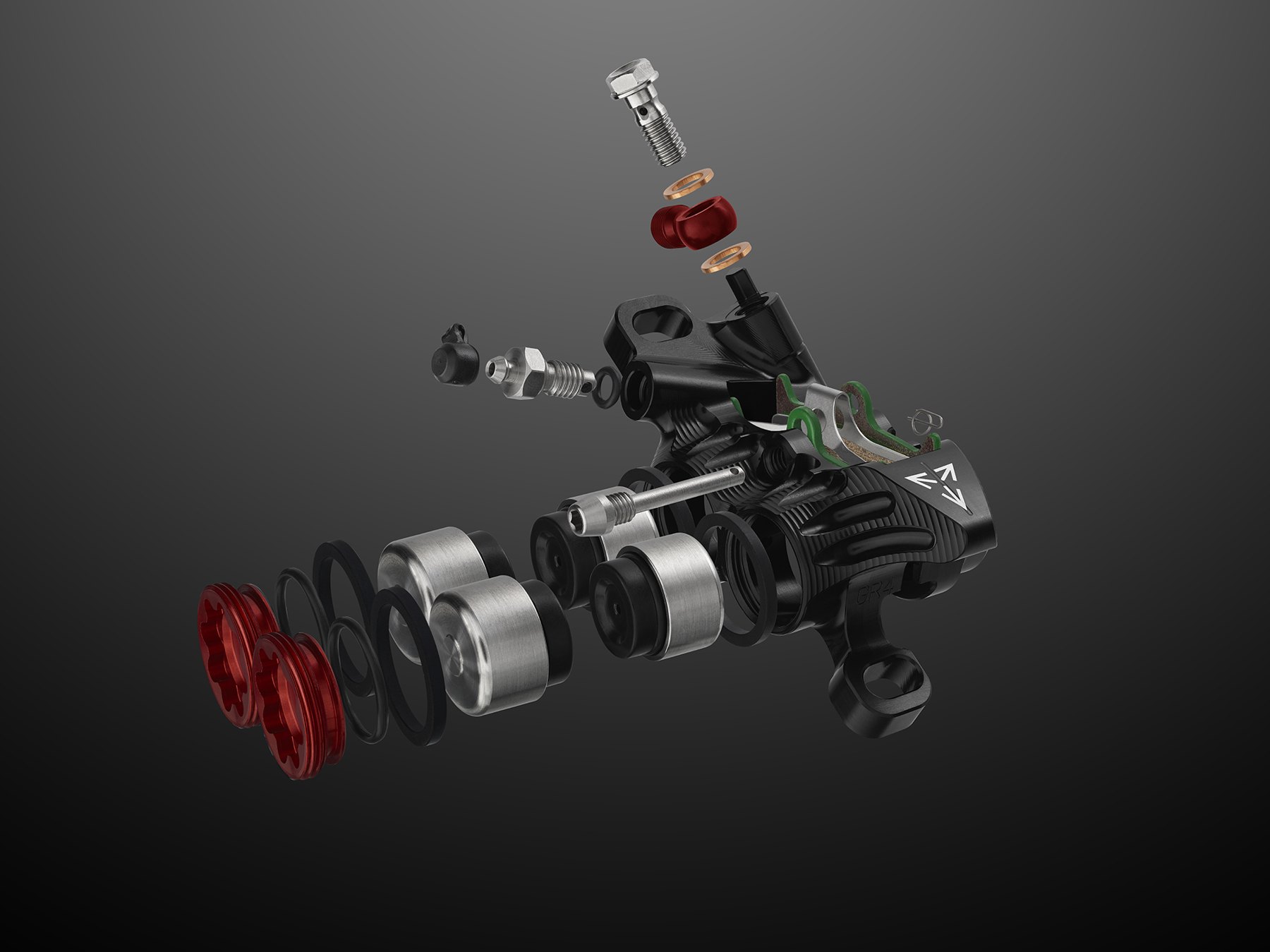
Setup and service notes
The GR4 should not be judged from a rushed install. A clean hose cut, correct DOT-fluid bleed, centered caliper, compatible rotor, fresh pads, and proper bed-in all matter. Hope’s complete braking guide is worth reading before treating any brake swap as plug-and-play.
The lever adjustment is useful, but it should be treated as setup range rather than a fix for a bad bleed. Set reach first, then tune bite point, then ride and adjust again after the pads have bedded in. If you service Hope Tech 4-style brakes at home, our Hope Tech 4 Easy Brake Bleed Kit review explains why the correct bleed process and fittings matter.
Rotor choice is the biggest buyer trap
The GR4 is a high-power brake, but it is not the answer if your plan depends on Hope’s 3.3 mm vented discs. Hope explicitly says the GR4 is not compatible with vented rotors. That is easy to miss if you only think “newer brake equals more heavy-duty everything.”
For most GR4 buyers, the decision is more likely to be rotor diameter, rotor thickness within Hope’s intended setup, pad compound, and cooling need. Bigger rotors can give more leverage and heat capacity, but they also need correct frame/fork clearance and mounts. Do not buy calipers first and ask fitment questions later.
What riders are saying
Real long-term GR4 feedback is still thinner than it is for older Hope brakes, so it is worth separating manufacturer claims from early rider discussion. In an EMTB Forums discussion comparing GR4 with other heavy-duty brakes, riders talk about power, serviceability, bleed process, lever feel, hand fatigue, and small hardware concerns. That is useful feedback, but it is still forum experience rather than controlled testing.
A Reddit rider’s early GR4 impressions are also positive about feel and bleed process after following Hope’s guidance. That is a useful early signal, not a final verdict. The safe conclusion is that riders who like Hope’s adjustable, serviceable brake feel are likely to understand the GR4 quickly, while riders chasing the cheapest or simplest brake probably will not.
Pros and cons
- Pros: maximum-power Hope gravity brake, strong serviceability story, tool-free reach and bite-point adjustment, modern four-piston caliper, revised EVO details, braided-hose options, and a clear role for e-bike/downhill/enduro use.
- Cons: expensive, unnecessary for many trail bikes, not compatible with Hope vented rotors, setup still matters, and early real-world feedback is not as deep as older V4 feedback yet.
Bottom line
The Hope Tech 4 EVO GR4 is a serious brake for riders who have a serious braking problem to solve. If you ride steep terrain, heavy bikes, e-MTBs, bike parks, or long descents where smaller brakes run out of consistency, the GR4 belongs on the shortlist.
For normal trail loops, the purchase case is much weaker. The GR4 is not worse because it is powerful, but power alone does not make a brake the right match. Check rotor compatibility, think honestly about your riding, and do not choose it if what you really need is a simpler trail brake.
FAQ
Is the Hope GR4 worth it?
The Hope GR4 is worth it if your riding actually needs maximum brake power: steep descents, bike-park laps, e-bike weight, heavy riders, or repeated braking where smaller brakes start to fade. For ordinary trail riding, it may be more brake than you need.
Is the Hope Tech 4 EVO GR4 better than the Tech 4 V4?
It depends on what you need. GR4 is Hope’s newer maximum-power gravity direction, but Tech 4 V4 still makes sense if you want the older V4 platform or the vented-rotor route. Do not treat GR4 as an automatic replacement for every V4 setup.
What is the main difference between Hope GR4 and V4?
The practical difference is that GR4 is Hope’s newer maximum-power gravity brake with EVO updates, while Tech 4 V4 is the older heavy-duty Hope option. The important buyer warning is rotor compatibility: Hope says GR4 is not compatible with vented rotors.
Can the EVO GR4 use Hope V4 vented rotors?
No. Hope’s GR4 product information states that the EVO GR4 is not compatible with vented rotors. If vented rotors are central to your setup, look carefully at the V4 path instead.
Is GR4 too much brake for trail riding?
For many trail riders, yes. It can be fitted to the right bike, but it is most convincing when the riding is steep, fast, heavy, or heat-heavy enough to justify a maximum-power gravity brake.
Should I choose GR4 or TR4?
Choose GR4 when maximum power is the priority. Consider TR4 if you still want a strong four-piston Hope brake but your riding is more trail-enduro than downhill or heavy e-bike use.
Does GR4 need a special bleed kit?
Use the correct Hope-compatible bleed process and fittings for the Tech 4/EVO brake system. A poor bleed can make even a powerful brake feel vague, so the service setup matters.