Are Hope Brakes Good? Power, Modulation, Noise, and Which Model to Choose
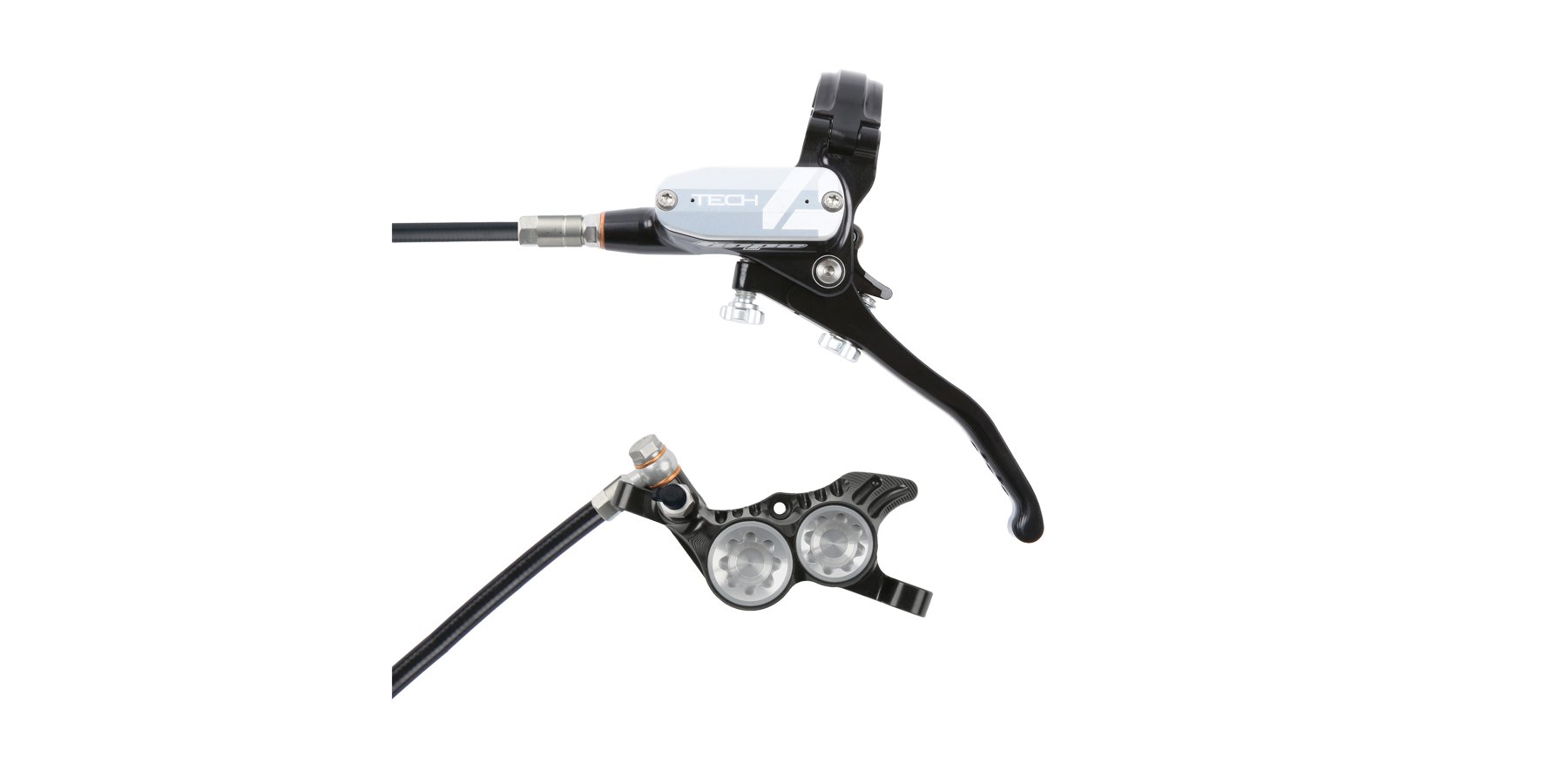
Hope brakes are good if you want a premium, serviceable brake with strong modulation, metal construction, rebuildable parts, color options, and a very direct mechanical feel at the lever. They are not the cheapest brakes, and they are not always the quietest or simplest option to set up.
The better question is not just whether Hope brakes are good. It is which Hope brake fits the bike. A light trail bike, a long-travel enduro bike, a downhill bike, an e-bike, and a gravel bike should not all be pointed at the same caliper, rotor, pad, and hose setup.
Quick answer
Yes, Hope brakes are good for riders who value modulation, serviceability, lever adjustment, rebuildable construction, and long-term parts support. They make the most sense on bikes where brake feel and maintainability matter as much as outright price. They make less sense if you want the cheapest powerful brake, a very sharp Shimano-style bite point, or a setup that needs almost no adjustment work.
What Hope brakes do well
Hope’s current brake range covers lightweight race brakes, downcountry/trail brakes, road/gravel calipers, four-piston trail brakes, gravity brakes, rotors, pads, mounts, and small parts. That breadth is one of the strengths. You can build a matched system instead of treating the brake as a sealed throwaway part.
The main strengths are modulation, machining quality, rebuildability, adjustment range, and spare-parts availability. On the Tech 4 V4, Hope describes tool-free bite point and reach adjustment, a rigid CNC one-piece caliper, hybrid pistons, improved shifter integration, and a 30 percent pressure increase compared with Tech 3. Those are not vague styling claims; they are the parts that shape lever feel, power delivery, and service life.
Where Hope brakes can disappoint
Hope brakes are not magic. They can squeal. They can feel underwhelming if the bleed is poor, the pads are not bedded in, the rotor is glazed, or the caliper is not centered. They can also feel different from Shimano brakes because the power tends to arrive in a more progressive way instead of a hard on/off bite.
That difference is why some riders love them and others bounce off them. If you want a very instant bite point, Hope may feel too smooth at first. If you want to feather braking through loose terrain, that same smoothness can be exactly the point.
Rider feedback: the pattern is clear
Rider feedback is generally positive around lever feel, build quality, power, and serviceability, but the complaints are worth taking seriously. In a Reddit discussion about Tech 4 V4 experiences, owners repeatedly talk about power, modulation, and build quality. That lines up with Hope’s own positioning for the V4.
On the other side, a Reddit thread about squeaky Tech 4 V4 brakes shows the common frustration: excellent brakes can still be annoying if noise, pad compound, contamination, resonance, or setup issues are present. Treat that as anecdotal, not a defect rate, but it is useful because it matches what riders actually ask after buying premium brakes.
Another discussion about older Hope brakes points to the long-term appeal: riders often mention serviceability and spare parts as reasons older Hope brakes can still make sense. That is one of the brand’s real advantages over cheaper brakes that are harder to rebuild economically.
Which Hope brake should you choose?
Start with the riding, not the color. Hope’s brake line now has several different jobs covered, and choosing the wrong one is the easiest way to be disappointed.
| Use case | Hope brake to consider | Why |
|---|---|---|
| XC and light race use | XCR Pro X2 | Lightweight two-piston direction where weight matters more than maximum heat capacity. |
| Downcountry and light trail | XCR Pro E4 | Hope describes this as a lightweight trail/downcountry brake using an E4 post-mount caliper. |
| Trail and all-mountain | EVO TR4 or E4-family setup | Four-piston control without automatically jumping to the biggest gravity brake. |
| Enduro, park, e-bike, and gravity | EVO GR4 or Tech 4 V4 | More heat and power margin for harder braking loads. |
| Road and gravel | RX/RX4/RX2 family | Flat-mount and road/gravel-specific brake compatibility matters more than MTB power claims. |
V4 and GR4: power first
The Hope Tech 4 V4 is the obvious choice when power and heat margin are the priority. Hope lists it as its most powerful brake, and the product page points to a 3.3 mm maximum rotor thickness with the V4 caliper. That makes it the brake to look at for enduro, downhill, heavier riders, and harder braking loads.
The newer EVO GR4 sits in the same gravity conversation. Hope describes the GR4 as a four-piston gravity brake for demanding use and states that it is not compatible with vented rotors. That last detail matters. More power does not remove the need to check rotor compatibility.
E4 and TR4: trail control
If the bike is a trail bike rather than a gravity bike, E4 and TR4-style choices may be more sensible. The Hope E4 brakes guide covers the current XCR Pro E4 and older Tech 4 E4 search confusion, while the EVO TR4 review covers Hope’s newer four-piston trail brake direction.
The point is margin. If you are not overheating brakes, not riding a heavy e-bike, and not doing repeated park laps, the lighter trail option can be the better match. Bigger brakes are only better when the bike and terrain use the extra power and heat capacity.
Pads and rotors matter as much as the caliper
A Hope brake can feel completely different with the wrong pad or rotor setup. Pad compound changes bite, noise, heat behavior, wet-weather feel, and bedding-in. Rotor size changes leverage and heat capacity. Rotor thickness and caliper compatibility also matter.
That is why a brake review is incomplete without setup context. The Hope brake pads guide explains compound choice and fitment, while the Hope brake rotors guide covers fixed, floating, Centre Lock, RX, and V4 vented rotor options.
Are Hope brakes worth the money?
They are worth it if you care about feel, rebuildability, machining quality, adjustment, and long-term ownership. They are harder to justify if the bike only needs cheap dependable stopping power and you are not going to service or tune the brake.
Think of Hope as a long-term component choice rather than a budget shortcut. If the brake will stay on the bike for years, the serviceability and spare-parts story matters. If the bike is being built to a tight budget, there are cheaper brakes that stop well enough.
Common buying mistakes
- Buying V4 because it is the strongest: great for gravity loads, excessive for some lighter bikes.
- Ignoring pad compound: pads can change noise, bite, and wet-weather performance.
- Skipping rotor checks: diameter, mount type, thickness, and frame/fork limits matter.
- Expecting Shimano bite: Hope feel is usually more progressive and controlled.
- Blaming the brake before checking setup: poor bleed, glazed pads, contamination, and caliper alignment can ruin any brake.
Bottom line
Hope brakes are good, but they reward the right buyer. They suit riders who care about lever feel, control, repairability, and a brake system that can be tuned around pads, rotors, mounts, and service parts. They are less ideal for riders who want the cheapest possible power or a brake that feels brutally immediate with no setup attention.
For trail riding, look at E4 or TR4-style options. For gravity, heavy riders, e-bikes, and repeated long descents, look harder at V4 or GR4. For road and gravel, stay in the RX family. If you are comparing the smaller DOT flat-mount option against bigger Hope calipers, start with the Hope RX2 DOT caliper review. The brand is strong; the model choice still has to match the bike.
FAQ
Are Hope brakes powerful?
Yes, especially the V4 and GR4 options. Lighter models are not meant to solve the same heat and power problems as the bigger gravity brakes.
Do Hope brakes squeal?
They can. Noise can come from pad compound, contamination, rotor condition, bedding-in, caliper alignment, or resonance. It is not unique to Hope, but rider discussions show it is a real concern to check.
Are Hope brakes better than Shimano?
Not universally. Hope usually appeals to riders who want modulation, rebuildability, and adjustment. Shimano often appeals to riders who prefer a sharper bite point and simpler value. The better choice depends on feel preference and use case.
Which Hope brake is best for enduro?
Tech 4 V4 and EVO GR4 are the obvious enduro/gravity candidates. Check rotor compatibility, frame/fork limits, hose choice, and pad compound before buying.
Are older Hope brakes still worth using?
They can be, if the condition is good and service parts are available. The main appeal is that Hope brakes are commonly valued for rebuildability and long-term support.